
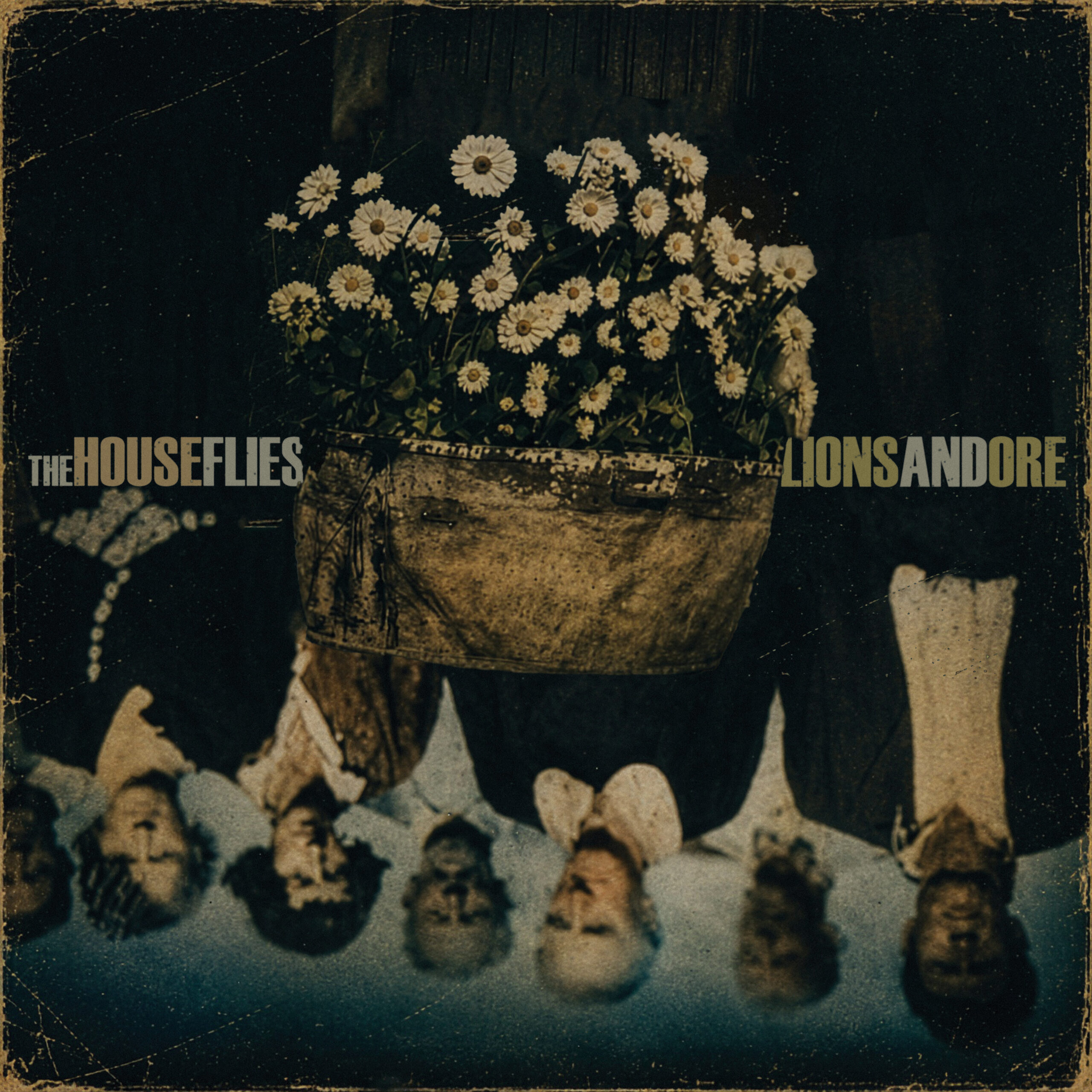
The US-based band “The House Flies” are back in the spotlight on our blog today as we take a closer look at their exceptional work. Being located in the heart of the Midwest region, these amazing musicians have crafted something truly unique by combining elements of gothic sound, post-punk music, and melancholic melodies. On September 4, they gave us a masterpiece called “Derelict Crawl” single which set the stage for the upcoming events. Following this up, they released an awesome seven-track album “Lions And Ore” on November 6. Let’s dive right into it!
Right from the start with the opening of “Goodnight, Goodnight, Lover Dear”, there is a heavy atmosphere of a large, gloomy landscape created by the song. The song starts with a slow and deep ambient noise accompanied by a low reverberation of the bass that creates an impression that it was recorded inside an abandoned church. The guitar in the song does not provide any hard riffing, but creates delicate volume swells that circle around the listener just like the evening fog. The track emerges with a stunningly sudden and exhilarating transformation, entering into a scene of sacred stillness encircled by the serene grace of hymns and domestic images. It gives one a feeling of crossing over into a sacred place where everything about that place, in its muted subtleties and domestic details, bears an undercurrent of reverence. Yet before one can become fully immersed in that sacred stillness, one finds the soundscape slowly expanding towards a majestic wall of guitars. That is no mere change, that is magic of the auditory sort, taking one from hushed and solitary contemplation to ecstatic triumph. Alex Riggen’s vocals in the song are simply stunning, starting with hushed and intimate baritone and evolving into desperation and resonance with the music rising into a great post-rock climax. The song features an extremely sparse drumming of Nick Pompou until the second half when tom patterns appear in the song.
Breaking through the serene gravity of “Lost Literature” is the rapid shift into an urgent, pulsing tempo. Lost Literature begins on a dime, with an intense syncopated drumbeat followed instantly by a fast, angular post-punk guitar riff slicing through the stereo. It takes the theme from a place of introspection, focusing on the pain of lost knowledge, history, and the unspoken words we fail to say when times get tough. The track starts out right off the bat, diving into the darkness of a night-time drive, projecting fleeting pieces of nostalgia against the most intense, powerful post-punk beat in the entire record. It recreates that feeling of being mesmerized by that sense of speed alone when looking out the window of a car covered in rain as fragmented thoughts race through your mind like flickering street lamps on the road ahead of you. With an irresistibly rhythmic and driving beat along with precise guitar work slicing through the darkness, the track turns nostalgia into pure energy. Ozzie Woods’ bassline is where this song gets its drive, providing an unstoppable kinetic energy that drives the song along.
Right from the get-go, “Derelict Crawl”in you find yourself transported into a world so beautifully constructed, every tone sounds like a revelation straight out of your ear. It becomes an immediate, battered-fist rally call for rebels, a refusal to live according to the strict agenda imposed on us all by a conformist world hellbent on brainwash. And you’re told to forget playing the part of the good kid or robot suffocating your soul in exchange for a 9-to-5 job. No, it’s time to break the molds, stand proud in your refusal to fit in, and scream to the roof that you were never meant to be caged. It creeps its way under your skin and stays long after the last note dies away, a living reminder that the real thing isn’t just experienced, it sticks around. In terms of sound, this song is extremely visceral and intense, creating an absolutely relentless post-punk rhythm which pierces directly into the soul through its hypnotic and pounding beats. In terms of production, however, this song is a tour de force of world-building, with intensely constructed layers of guitar riffs creating an atmosphere of suffocating clouds that loom over the track. These clouds fall silent at various moments before reappearing with even more ferocity and intensity. This entire maelstrom of sound revolves around the mantra of “We don’t belong.” This is the point at which we are privy to the purest form of hypnotically repetitive nature of the whole album. Not only does it provide a pathbreaking direction for the song listing, but it also serves as the perfect precursor to the future atmospheres that will be encountered. Any listener with an interest in the dark world of post-punk, gothic rock, noise rock, and alternative guitar music will find that this track is not just great but is absolutely necessary for him/her.
But taking a more unsettling direction, the track “Snakes And Toads” develops a complex folk-gothic sensibility. The song opens with a single acoustic guitar part, played with finger picking and characterized by its ominous nursery rhyme vibe in the minor key, accompanied by the breath sound of the room. With the tempo slowing to an ominous, laborious crawl, this song sets up a juxtaposition of devotional religious vocabulary and stark animal imagery set against some of the most sinister and dark soundscapes on the album. The track begins not with a burst of energy, but rather in an eerie, hallowed silence—arranged slowly and built on a bed of ominous guitar chords and deep, rumbling bass frequencies.
The lyrics take on the form of a profane prayer, using references to animal instincts, fangs, poison, and devotion as metaphors for how obsession can make even love go wild. The singer, Riggen, drops her voice into a hypnotic murmur, singing each line with the gravity of a ritual being performed in secrecy. The juxtaposition of the sacred hymn-like tone against the sinister noise rock backdrop is both terrifying and mesmerizing.
Establishing rhythmic energy, “Count Us Down” kicks off with an energetic click-track snare beat combined with a groovy bassline that carries an undertone of funk post-punk. It is here that the flicker of street lamps, the gloominess of the weather and the spellbinding repetition of structures combine in order to bring to the second half of the album its true hypnotic point. It is an absolute lesson in atmospheric rhythm – music of such kind takes you for a walk down a wet city street at night when the pace of thoughts is dictated by the rhythmic sound of falling raindrops and passing lamps.
By playing dense and cyclic rhythms and covering them up with a dark texture of echoey guitars, the group brings into being a true atmosphere of trance within the chaotic structure of the album. Riggen’s vocals flow like a mantra in the moody clouds. The power of repetition and routine becomes an intoxicating experience of meditation. This hypnotic heart does not only hold together the second part of the album but puts the listener into an atmospheric trance.
At a snail’s pace, Shelter Me gives us an experience of true vulnerability. In the intro of this track, a single damp organ chord slowly fades out into a lush reverberation. With the closing stretch of the album looming in the horizon, the claustrophobic heat, the raw exposed wire, and the oppressive enclosed space form the context to one of the rawest and unadulterated passages towards the end of the album. By stripping away all of the polish, the song plunges the listener into a claustrophobic space where each breath is felt like static electricity. The recording opts not to go for the grandiose reverberation but instead keeps things uncomfortably close – the scratch of the plectrum against aged strings, the strain from the overused amplification and the tight snapping of the snare drums in the narrow confines. The lyrics are honest enough to describe the claustrophobic experience of feeling cornered and uses the imagery of heat and wire to reflect the same. The vocals of Riggen shine bright against the sweltering arrangement.
This album achieves its greatest culmination through “The Glass, The Orchard,” a nine-minute masterpiece that integrates everything in the album into one piece. It culminates, however, in an astounding, breathtaking manner through the initial tender closing scene marked with nostalgia and intimate reminiscence. Everything opens in absolute silence, with a soft guitar arpeggio played against the background of a warm synth pad as though the listener looks back in time in a kind of nostalgic haze created by the amber of years past. As the story progresses, however, this fragile and meditative space does not want to stay in the frame. Gradually and organically, it starts to acquire power and evolve from the intimate, almost whispering acoustic reverie into an overwhelming and wide-screen post-punk conclusion. The guitars entwine into an intense passionate storm powered by the solid beat of the rhythm section as if the latter fights with time. Beneath all this raging music, there is the desperate yearning for remaining in view, to become anchored to some fleeting moment of beauty before it disappears into oblivion. Riggen’s voice stretches to the utmost, developing from a whispering emotional cry into an awe-inspiring powerful belt over this storm. When the final wall of feedback is finally dissolved into silence, you find yourself gasping after a work of undeniable mastery.
And they proceeded to multiply this dark landscape exponentially by releasing their magnificent second LP Lions And Ore. This is an important landmark for the band, as this record marks their first album to showcase the definitive lineup consisting of Alex Riggen, Burnie Eckhardt, Ozzie Woods, and Nick Pompou. As a result, the band has no problems with smoothly performing in longer and widescreen compositions, heavy transitions, subtle hypnosis, quiet and rural visuals, all while keeping the power and honesty of their previous work. And standing in front of this LP, one can only feel amazed. The House Flies never fail to challenge our expectations, pushing their boundaries with each new drop while strengthening the connection with their audience. We’re in! Our attention is fully taken by the excitement, and we can’t wait to see what further greatness awaits them.
Stream the “Lions And Ore” album on Spotify
Follow The House Flies here and on their socials: Facebook, YouTube, Bandcamp

- “LIONS AND ORE”: THE HOUSE FLIES DELIVER A GOTHIC POST-PUNK MASTERCLASS FOR THE AGES - 10 November 2026
- IF THERE WAS EVER A FOOL (ONE OF A CAST OF MANY) 1” C’BATCH UNVEILS HIS 14-YEAR CINEMATIC ROCK MASTERPIECE - 10 November 2026
- “STOLEN VALOR”: TONY FRISSORE AND AXIOM RECLAIM THE SOUL OF HOUSE MUSIC - 10 November 2026