
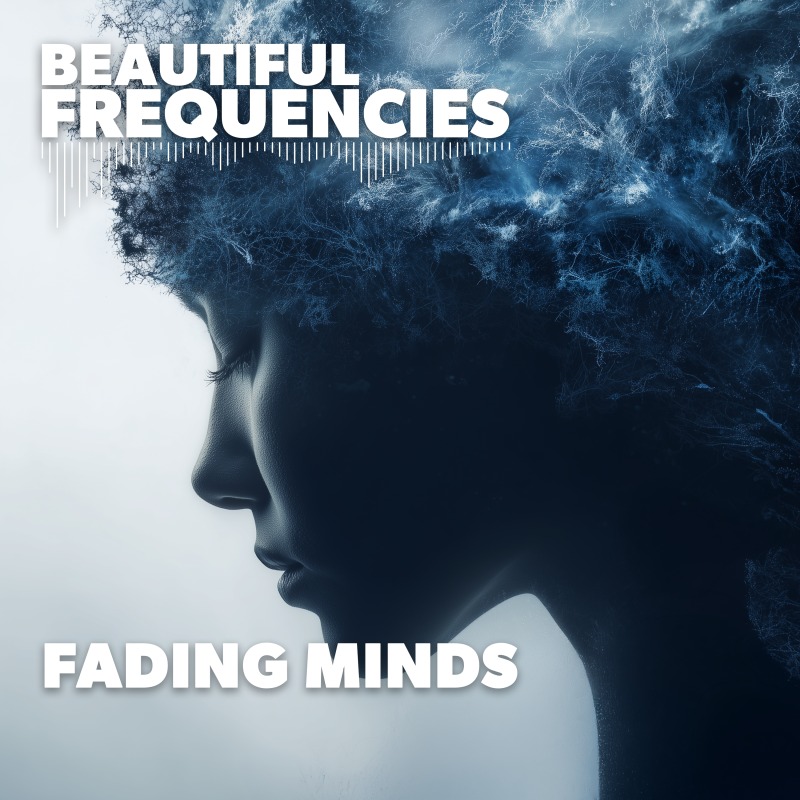
Released on 30th July as a triumphant milestone in an already captivating discography, “Fading Minds” marks the breathtaking third album from Beautiful Frequencies, the visionary solo electronic music project of a remarkably gifted Krefeld, Germany-based artist. After dazzling listeners with the sweeping, widescreen ambition of Rise Up For Tomorrow and Second Eden, records that boldly tackled vast global and technological themes, this stunning 12-song album takes a courageous, deeply moving turn inward. Trading macro-level commentary for raw, unfiltered intimacy, the project steps into the fragile, quiet corners of the human experience, weaving together deeply human stories of connection, loss, and emotional distance that linger in the chest long after the final note fades. It is rare to witness an artist pivot from grand, futuristic soundscapes to such tender vulnerability with this level of grace, mastery, and sonic confidence, so settle in, turn up the volume, and allow me to tell you more about this record.
“Artificial Love” begins with a slow, isolated pulse of a solitary analog synthesizer, flickering like a dying pilot light before a crisp, compressed drum machine snaps into a driving, danceable rhythm. Lyrically, the song uses IT and technical terms to describe love and relationships. The vocal performance carries a cool, detached vulnerability, smooth, layered harmonies that float just above the mix without ever begging for sympathy. Musically, the instrumentation relies on shimmering arpeggios and a pulsing bassline that mimics a racing heartbeat under pressure. The song sounds like a song that The Weekend will perform. This creates a lasting impact on listeners by forcing them to audit their own relationships, setting a melancholic yet hypnotic tone for the rest of the record.
An immediate change occurs as “Player Two” comes in with an extremely quick-paced, staccato beat made up of synthetic bleeps and a very hard, four-on-the-floor kick drum that sounds like starting a game that you already know you will lose. For context, a player two in a video game is a partner and a support system to defeat obstacles. The entire theme uses gaming lingo to describe a relationship or love connection. The vocals take on a breathless pace, which captures perfectly the sense of nervous anticipation of not being given a turn ever again. Musically, it relies very much on the retro-futuristic sound of synth-pop, with lead melodies that are bright and buzzy, creating stark contrasts against the lyrical tone of resigned sweetness.
It starts with an undercurrent synth baseline in “Shadow Mode”, building up gradually before a snare roll shatters the silence. Lyrics touch upon the subject of self-protection and emotionally shutting down, describing the experience of being there physically, but wiping away all traces of one’s emotions in the process. The character in the song feels overstimulated by life itself so, he or she takes a break in the shadow, away from prying eyes to just take a breath and reset so he or she doesn’t burn out. The vocals are barely audible, performed in a hushed tone with plenty of reverb adding to the feeling of being in an echoing room all alone. Instrumentation is somewhat more gloomy and sparse in Shadow Mode, using mellow synth pads with clever panning techniques, drifting back and forth between ears. Overall, it leaves an impression of validation of an impulse to vanish when visibility does more harm than good.
“Tomorrow’s Sun” starts off with a glacial succession of bright and elevating chord progressions which recreate the sensation of the golden hue of sunrise penetrating through thick curtains in the aftermath of an endless night. The theme of the song is Hope. It’s about holding on and holding out till everything is okay. Even the Holy Bible says that “weeping may endure for the night but joy, comes in the morning”. The song encourages us to keep going till we can see the light at the end of the tunnel. The singing is filled with a new emotional intensity that is achieved by switching from the whispered vocals of the previous songs to more honest and sincere ones. As for musical elements, the song features a rich combination of acoustic guitar riffs smoothly blended under the electronic sound of pads and steady beat of the drums.
The song “Room 505”. begins with a sparse, ticking clock-type percussion loop, which includes the lone, sobbing piano chord, creating an immediate physical feeling of isolation from the very start. The lyrics use the image of a hotel room as a metaphor for transience, faded memories, and impermanent human connections, in which individuals come, unpack their luggage, stay for a short while and then depart, leaving not even a trace behind. Though the song isn’t asking us to bury the things that plague us or compartmentalize, it is healthy to find the one place where you can unload your burdens even if it’s just for a second. This could be a parent, guardian or any trusted adult or counselor/psychologist. The vocal delivery of the song is highly intimate with vocal cracking and whispering which make listeners feel as if it is a voice of someone on a late night phone call. Musically, it is a combination of natural piano sounds and delayed synthetic atmosphere which creates a sense of acoustic geography in the song. The effect on the listener is overwhelming as it evokes nostalgia for the places and people who once were ours.
Next is The song “What We Leave Behind”, begins with an epic swelling of ambient string synths that slowly form themselves into a steady beat resembling a heartbeat. The song can be considered one of the emotionally charged moments on the record, as it focuses on the topics of legacy, loss of memory, and traces of influence left on people who will be left behind. The vocals of the song carry an incredible amount of experience and knowledge accumulated throughout life. The instrumental composition takes time to unfold, using accentuated synth parts and weeping melodies that transform the song into an anthem on mortality.
Starting off with an eerie, cascading wall of guitar delays and an irregularly rhythmic electronic beat, “Somewhere Between Us” instantly creates a sense of uneasiness and drifting. The track encapsulates the painful gray space between two people who are in a state of flux, where one is physically and emotionally distant even while sharing the same bed, but miles away in spirit. It also talks about the things that are left unsaid in a relationship and how it can slowly turn into resentment. This song is unique in its use of dueling harmonies that are panned ever so slightly apart from one another, thus beautifully illustrating how physical closeness can be so starkly contrasted with emotional distance. Musically, it contains some of the most complex synth pop production in the album, with intertwining arpeggios playing off of an emotionally charged bassline.
“Signals We Ignore” begins with a strong and soft burst of electrostatics that sounds as though the beginning of a failed radio signal, but then quickly slides into a hypnotic and mid-tempo groove. The lyrics examine the ability of people to ignore and deny obvious signals of warning in their relationships by choosing not to accept them out of fear of walking away from reality. It’s seeing the red flags in people but ignoring them because of your feelings and how with time, it turns into this white elephant in the relationship. The delivery of the vocals is sharp and sarcastic, but also self-aware, shining brightly through the thick production. The music in “Signals We Ignore” is driven by an effective rhythm section and quirky, blipping synthesizers that are reminiscent of a flashing dashboard light.
The song “Invisible Lines” opens with a dark and dramatic synthesizer piece which introduces a crawling melody, only for the bass line to come in and provide a grounding element to the composition. The lyrics focus on the invisible boundaries and the feeling of knowing that there’s been a shift in the relationship but, instead of talking about it, we pretend it isn’t there because it could likely cause the relationship to end. The vocals are soft and vulnerable but incredibly controlled, shifting back and forth from a chest voice into falsetto with incredible ease. Musically, the composition features a contrast of playful, bright high end synths and a dark, low end drone.
The song “Low Battery Hearts” starts off with a lovely melody followed by an almost bare, pulsating synth bass which is a representation of the fading heartbeat. The lyrics of the song are quite a poetic metaphor for the emotional state of feeling burned-out, tiredness and exhaustion when you put all your efforts into a relationship, only to be drained from inside. The song compares a relationship to that of a device’s battery health or percentage because, the characters in the relationship are slowly losing battery power. The voice of the singer itself is tired, but also melodic and beautiful, as if the exhaustion of life experiences was written in each line. In terms of the production of the music, the theme of the song is perfectly captured, and at some points, the instrumental drops down as if it lost its power before coming back again and gaining compressed energy.
With an opening swell of dense, slow cascading synth pads that immediately induces a disoriented feeling of déja vu, “Still Feels Like You” instantly establishes its theme, which is about the spectral memory of muscle memory and how the brain and body may lose the name or the face of someone because of cognitive deterioration, but the instinctive feeling of love is forever ingrained in the body. The character in the song still sees his or her partner in everything. Everything holds a memory of them and he it seems to but be able to forget them easily. The vocals are delivered with romantic desperation that swells with passionate intensity when delivering the choruses. Musically, it is by far the most majestic and cinematic piece of electronic pop music in the entire album, anchored by a huge, pulsating beat and sparkling synth work.
The song that completes this album is “Almost Home”, featuring a decaying cycle of acoustic guitar sound looped underneath an ambient wash of wind-like synth sounds that conjure up an image of a solitary stroll along a well-trod street on a gloaming evening and an ethereal mouth percussion. The song’s lyrics tap into the melancholy idea of being near the end of the emotional struggle and finally feeling the physical presence of peace ahead, even though the finish line remains elusive. Here, home is used to represent anything that will give the character in the song respite. The vocals have been stripped of everything unnecessary, and what we get is the bare essence of the voice delivered in a whispered tone. Instrumentation is slowly disintegrating piece-by-piece until there is nothing left except one note of a synth fading into oblivion.
The album has been made inside the studio that has naturally evolved together with the musician from the soulful warmth of analog recording to an unbound realm of digital sound production possibilities. It is not simply an album but the manifestation of a long-term dedication to perfection in sound engineering that the listener will surely notice. Instead of taking the safe way, the album’s sound combines bold experimentation and music creation aided by AI technology. Far from being cold and sterile, the result is a confirmation that high-end technology is able to enhance the purity of human emotions. However, what makes the album a real magic experience for the veteran listener is the impeccable arrangement, mixing, and mastering of the sound. Every single frequency is there for a reason, and all transitions sound like revelations. The clarity of the sound is like meeting an old friend that has somehow transformed into an even more beautiful version of itself.
With three albums under his belt, Beautiful Frequencies has consistently continued to push the boundaries of his musical universe through fearlessness in exploring massive themes of technology, change of the environment, and the future of mankind and then narrowing in on the incredibly vulnerable territory of memories, identity, emotional distance, and human connections. And right at the heart of this project is a demonstration of how to create an electronic record that blends energy, atmosphere, and emotions through vivid storytelling and gives the listener much more than a simple auditory experience. In a world full of quick fixes and shuffle modes, being able to listen to a complete record without once thinking about skipping any tracks is truly an achievement—quite frankly, I can’t recall the last time I was completely captured by an album from its opening to the very last note. With this particular album, not only has Beautiful Frequencies demonstrated what a visionary producer and story teller he truly is, but he has gained himself a loyal fan for life.
Stream the “Fading Minds” album on Spotify
Follow Beautiful Frequencies here and their socials: Facebook, Instagram, TikTok, YouTube

- BEAUTIFUL FREQUENCIES CAPTURES THE FRAGILE ARCHITECTURE OF HUMAN CONNECTION ON “FADING MINDS” - 13 November 2026
- PURE SONIC FURY AND UNSHAKEABLE BELIEF: LONDON ALT-ROCK POWERHOUSE BLOCKADE SHATTERS DOUBT WITH THEIR EXPLOSIVE NEW ANTHEM, “WHAVEY” - 13 November 2026
- KAHMENCENTS TURNS HEARTBREAK INTO PURE EUPHORIA ON HIS SOUL-STIRRING NEW ANTHEM, “LOVE JUNKIE” - 13 November 2026