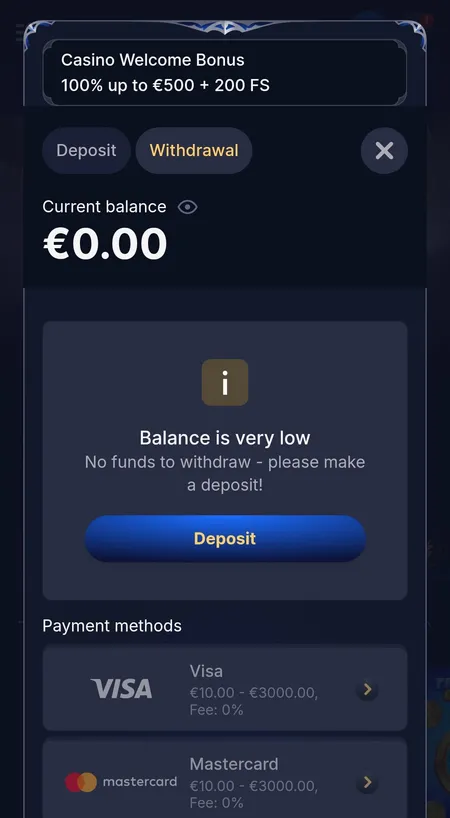
The withdrawal tab is where players who skipped the banking section at registration get an unwelcome surprise. Deposits are designed to be frictionless; withdrawals are designed to be verified. Understanding that asymmetry before your first deposit — not after your first win — is the single most valuable piece of cashier knowledge for UK adults aged 18 and over.
This guide explains how cashing out works at Cazeus Casino UK, operated by Araxio Development N.V. under a Curaçao licence. The advertised processing time is up to twenty-four hours after approval, but several conditions sit between requesting a withdrawal and seeing money arrive. Live terms on the operator site always prevail.
The single most useful idea in this guide is that a smooth withdrawal is built long before you request it. The verification you complete at registration, the deposit method you choose, the bonus you clear or forfeit, and the records you keep all determine how quickly and cleanly your money comes out. Players who treat the withdrawal as an afterthought meet friction; players who prepared meet a formality.
It also helps to understand why withdrawals are deliberately more scrutinised than deposits. Anti-money-laundering obligations and fraud prevention require operators to confirm who is receiving funds and that the money followed a legitimate path. That scrutiny is not an obstacle invented to delay you — it is a standard part of regulated and offshore payments alike. Cooperating with it efficiently, through clean documents and consistent methods, is how you turn a checkpoint into a quick pass.
Open the withdrawal tab early
Before you ever need it, open the withdrawal section and read it. Note the distinction between your available balance and any bonus-locked balance — the two are not the same, and only cleared funds are withdrawable. Knowing the minimum withdrawal and the accepted methods in advance prevents disappointment when you finally have winnings to take.
KYC is the gatekeeper
Know Your Customer verification is the most common reason a first withdrawal stalls. Operators typically require:
- Photo ID — passport or driving licence, fully legible with no glare
- Proof of address — a utility bill or bank statement dated within ninety days
- Payment verification — proof that the withdrawal method belongs to you
Every detail must match your registration profile exactly. A nickname instead of a legal name, an old address, or a blurry photo each triggers a resubmission that adds days. Prepare these documents at registration and the first withdrawal becomes a formality rather than an ordeal.
Bonus and AML holds
Two kinds of lock can block a cashout. An active bonus holds your balance until wagering completes — attempting to withdraw mid-rollover typically forfeits the bonus. Separately, anti-money-laundering rules may require a minimum turnover of your deposit before withdrawal, even with no bonus active.
Read the relevant annex on Cazeus casino so you know which lock applies to your balance. Confusing a bonus wagering requirement with an AML turnover rule leads to the wrong decision about whether to forfeit or keep playing.
Why twenty-four hours is not the whole story
The advertised window usually describes the operator's internal review and approval after KYC is complete — not the moment money lands in your account. The real timeline has three stages: your request enters a queue, the operator reviews and approves it, and then your payment provider settles it. E-wallets settle quickly after approval; cards add the issuer's own processing days; bank transfers can be slower still.
So a "24-hour" withdrawal can realistically take several days door to door, especially for a first cashout that also triggers verification. Plan your cashflow around the full chain, not the headline number.
The most common delays
- Incomplete or low-quality KYC documents
- Withdrawal method not matching the deposit method
- Active bonus wagering not yet cleared
- Weekend and holiday queues for manual review
- First-withdrawal security review applied to new accounts
Most of these are avoidable with preparation. Verify early, use a method consistent with your deposit, and clear or consciously forfeit any bonus before requesting a payout.
Method matching and crypto verification
Anti-fraud policy often requires withdrawals to return to the deposit method. If you funded via card, the refund-style portion usually goes back to that card; surplus winnings may route to an alternative approved method. If you deposited via Paysafecard, plan an alternative exit rail in advance, since you cannot withdraw to a spent voucher.
For crypto withdrawals, expect an extra security step: confirming a new destination address by email can add hours but protects you against address tampering. Double-check the address and network before confirming — a crypto withdrawal sent to the wrong place is not recoverable.
First withdrawal as a test
Once KYC is approved and any bonus is resolved, a small first withdrawal is a sensible test. It validates that your method works end to end and reveals the true timeline for your specific bank or wallet, before you ever need to move a larger sum quickly. Treat it as reconnaissance.
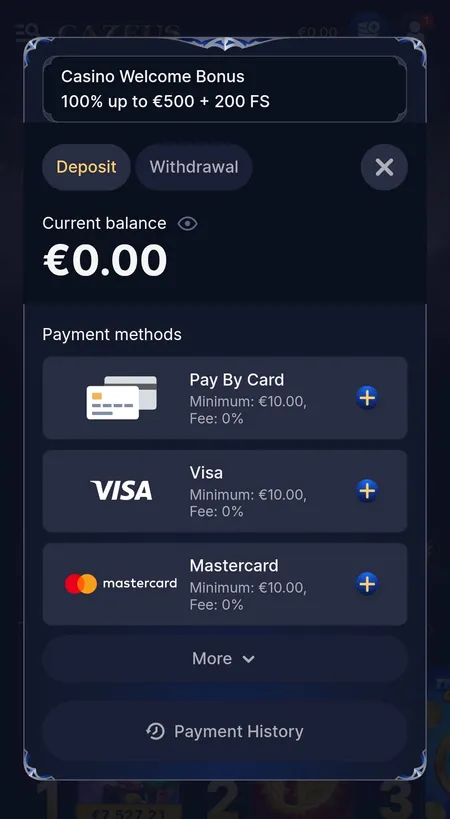
The first withdrawal also exposes the link between how you deposited and how you can cash out. Because the method you funded with usually dictates the exit route, a quirk in your deposit choice surfaces here for the first time. Discovering it on a small test withdrawal is far better than discovering it when you urgently need a large balance moved.
Partial requests and cancellations
If you need only part of your balance, request the amount you want rather than the whole sum. Should you need to cancel a pending withdrawal, do it only through the official cashier interface — never via an unsolicited message claiming to help. Cancelling a withdrawal to keep playing is also a moment worth pausing on: reversing a cashout to gamble more is a recognised warning sign.
Monthly caps and large balances
High balances can exceed monthly withdrawal caps stated in the terms, requiring the payout to be split across periods. If you are sitting on a large win, read the cap rules before assuming a single lump-sum transfer is possible, and contact support to confirm the schedule. Keep dated records of every request and response.
Support tickets that resolve faster
When you contact support about a withdrawal, lead with facts: your registered email, the withdrawal reference, the method, the amount, and the date. Attach screenshots that exclude full card numbers. Never send a complete card number or your password in a chat window. A concise, factual ticket is processed faster than an emotional one, and it builds a clean record if escalation is ever needed.
Document quality and resubmission loops
The most frustrating KYC delays are self-inflicted through poor document images. A passport photo with glare across the number, a utility bill cropped so the address is cut off, or a statement older than ninety days each triggers a resubmission request — and each round trip adds time. Photograph documents flat, in good light, with every corner and digit legible, the first time. One clean submission beats three blurry ones.
Disputes on an offshore brand
Because Cazeus operates under a Curaçao licence rather than the UKGC, dispute escalation differs from UK-regulated sites. There is no UK ombudsman route; resolution runs through the operator's internal complaints process and the licence issuer's limited channels. Dated records of terms, transactions and correspondence are your strongest asset if a dispute arises.
This makes record-keeping a practical habit rather than paranoia. Save screenshots of the terms as they stood when you played, your transaction history, your KYC submission confirmations and any support correspondence. If an internal complaint stalls, that documented timeline is the difference between a vague grievance and a clear, evidenced case. On offshore brands, your own records often do the work that a regulator would do elsewhere.
A harm signal worth naming
If you find yourself chasing losses specifically to reach a withdrawal minimum, or cancelling withdrawals to keep gambling, treat that as a signal rather than a strategy. Contact GamCare on 0808 8020 133. Withdrawal behaviour is often where the line between entertainment and harm first becomes visible.
Weekend and peak-period queues
Withdrawal review often involves manual steps, and those steps run on the operator's working schedule. A request submitted late on a Friday may sit until the next business cycle, and busy periods around major sporting events can lengthen queues further. This is not necessarily a sign of a problem — it is the reality of manual review on an offshore brand. Submitting a withdrawal earlier in the week, with verification already complete, gives it the smoothest path. Planning around these rhythms beats refreshing the page in frustration over a weekend.
The psychology of the pending window
Many platforms hold a withdrawal in a "pending" state for a period before processing, during which you can cancel it. That window is convenient if you genuinely change your mind, but it is also a trap: cancelling a withdrawal to put the money back into play is one of the clearest behavioural warning signs in gambling. If you notice yourself reversing payouts to keep gambling, treat that as a signal to step back and, if needed, to contact GamCare on 0808 8020 133. A healthy relationship with withdrawals is to request, wait, and receive — not to request and reconsider.
Keeping expectations realistic
The advertised twenty-four-hour figure describes one stage — the operator's review and approval after verification — not the full journey to your bank. Realistic end-to-end timing depends on your method: e-wallets are quickest after approval, cards add issuer processing days, and bank transfers can be slower still. A first withdrawal that also triggers KYC naturally takes longer than later ones. Setting your expectations to the full chain, rather than the headline, turns a normal multi-day process into something you planned for rather than something that worries you.
Withdrawal readiness checklist
- KYC approved with legible, matching documents
- Bonus cleared or consciously forfeited
- Withdrawal method consistent with deposit rules
- Realistic expectation of the full settlement timeline
- Records of requests and correspondence kept
Available balance versus locked balance
One of the most common points of confusion at the cashier is the difference between your total balance and what you can actually withdraw. Funds tied to an active bonus, or to an unmet anti-money-laundering turnover requirement, show in your balance but are not yet free cash. Attempting to withdraw locked funds either fails or forfeits the bonus. Before requesting a payout, read the balance breakdown so you know which portion is cleared and withdrawable and which is still committed. Treating the headline balance as available money leads to disappointment and, sometimes, an accidental forfeiture.
Verification once, smooth payouts after
The good news about KYC is that it is usually a one-time hurdle. Once your identity, address and payment method are verified and on file, later withdrawals typically skip the document stage and move faster. This is why completing verification early — ideally at registration, while your balance is zero and there is no urgency — pays off repeatedly. The first withdrawal carries the verification overhead; every subsequent one benefits from the work you did upfront.
Planning around your own cashflow
Because a withdrawal is not instant, align your expectations with your needs. If you may want quick access to winnings, choose an e-wallet method that settles fastest after approval and complete verification in advance. If you are content to wait, a bank transfer is fine. The mistake is assuming same-day access by default and then feeling let down by a normal multi-day process. Knowing your method's true timeline lets you plan rather than worry.
A withdrawal handled with preparation is uneventful — which is exactly the goal. The work happens at registration and first deposit; the payout is simply the system honouring an account you set up correctly. If you remember only one thing from this guide, let it be that the smoothest withdrawal is the one you made easy weeks earlier by verifying promptly, depositing cleanly, and keeping honest records of every step along the way.
18+ only. Gamble responsibly. This article is not legal, financial or gambling advice. Terms on the operator site always prevail. GamCare and BeGambleAware support UK residents.