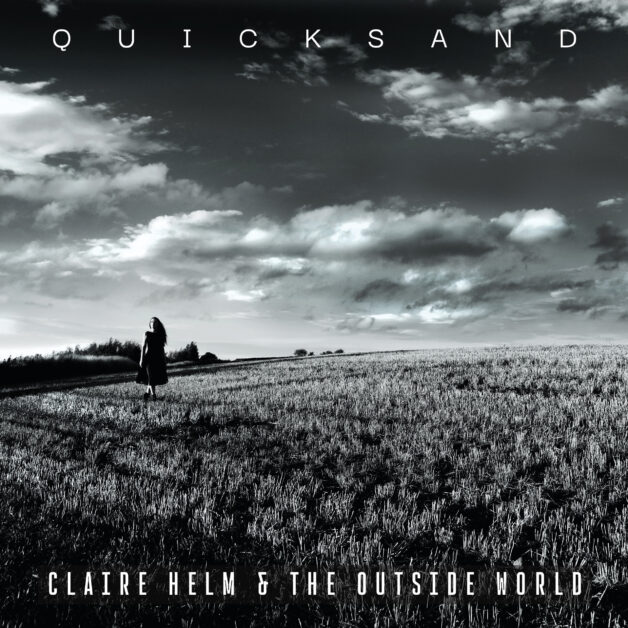
Claire Helm is a veteran recording artist and live performer, as well as a session vocalist. She is an artist grounded in the strength of good lyrics and songs, the beauty of real instruments, and the purity of an honest voice. Claire’s music celebrates beauty without ever being beautiful. Imagery: “beautiful melodies, lush harmonies, and musicianship that listens as much as it ever speaks. Every note is thoughtful and well-placed, every song carefully assembled to create a sonic landscape that’s both intimate and expansive. Accompanied by a band, The Outside World, Claire released an eleven-track album entitled “Quicksand” on December 12th. It is a body of work that breathes emotion and intention, inviting the listener to sink into its textures and stories rather than rush past them. Now, let’s step inside the album and explore what makes “Quicksand” such a compelling and affecting listen.
“Ghost”, the first song on the album, features an eerie, solitary acoustic guitar riff that seems to be reverberating through a deserted hallway. The “half-life” of a broken relationship, that is, the lingering presence of someone who is no longer there, is the main focus of the theme. The muscle memory of love, such as reaching for a hand that has been absent for months, is explored in Helm’s lyrics. The character is so stunned by the disappearance that she asks him who he is, sarcastically. From a skeletal folk melody, the song develops musically into a rich, reverb-heavy ambiance that evokes the sensation of being haunted by memories. Claire’s breathy, vulnerable vocal delivery instantly draws listeners into a state of quiet introspection and forces them to face their own “ghosts.” This beautiful song is the hello and the taste of the awesome experience ahead
The second song is called “Nothing Changes”. The song begins with a steady, almost unyielding guitar and drum beat that reflects the lyrical theme of stagnation that is the core of the song. The frustration of the “loop” and the knowledge that, despite our best efforts, we frequently awaken in the same mental ruts and vision cycles. This gritty, mid-tempo anthem explores the benefits and drawbacks of familiarity. The “quicksand” that the album title alludes to is physically felt by the listener thanks to a thick bassline that drives the musicality. Anyone who has ever felt like they are running in place will find great resonance in this relatable “stuck-in-a-rut” anthem. It doesn’t normalize the feeling, but it is just a reminder that nobody has it all figured out and no one is perfect.
The album’s next track is “Kings & Queens.” A majestic, slightly lighter folk-rock strumming guitar pattern is used in the intro to change the mood and give listeners something new. This is the sociological core of the album, which explores the conceit of seeking approval from others and the internal hierarchies we create in our social circles. The character in the song seems to have bought into this hierarchy for a time, something shifts and changes, and she gives this system the middle finger. The lyrics, which remove the “crowns” people put on to conceal their fears, are both scathing and sympathetic. Here, the arrangement is more elaborate, with swelling strings that give the lyrics about false grandeur a sense of irony. By removing pretense and providing a realistic reminder that everyone is engaged in the same silent struggles behind their public personas, it has an impact on the listener and lets us know that even our so-called “Kings” and “Queens” are human and also struggle just like we do
“Bobby”, which begins with a gentle, leisurely guitar melody, creates a very intimate yet hardcore atmosphere. The theme revolves around protective love and the anguish of witnessing a loved one self-destruct or struggle with their identity. Using “Bobby” as a stand-in for everyone we’ve attempted to save but failed, it’s possibly the album’s most lyrically direct song. I love this song because we have all had a Bobby in our lives. There is a lot of wildness and upbeat energy, which makes the listener sit with the weight of the words while having fun too. It’s a gut-punching and fiery experience that frequently leaves listeners thinking quietly about their responsibilities as friends, even though we are dancing.
“She Stands” is the next song on the list. The song opens with a defiant, rhythmic pulse. This song, which emphasizes the silent act of just staying upright when everyone else expects you to fall, is an anthem of female strength and resiliency. It is not only about women, though; I see this song as universal proof of the resiliency of human beings in general. When we narrow it down. The lyrics describe a woman’s perseverance using architectural metaphors, such as pillars, storms, and foundations. In terms of music, it’s not a slow-burning crescendo because it begins fiercely and culminates in a wall of sound with layered vocals and crashing cymbals. As the “spine” of the album’s story, it gives the listener a rush of adrenaline and serves as a reminder of their own resilience.
An acoustic guitar is layered over a shimmering, upbeat synth pad at the beginning of “Always Getting Better.” The pressure to constantly be “evolving” when sometimes we just need to be content with where we are is the theme of “the great lie” of continuous self-improvement. It’s a witty, if somewhat cynical, perspective on wellness culture. This is reflected in the music, which is “too pretty,” bordering on saccharine, until the illusion is broken by a distorted guitar bridge. It causes the listener to wonder about the unrelenting quest for perfection and discover an odd solace in their own untidy, incomplete state.
The title track, “Quicksand,” begins with an unsteady, distorted guitar tone that creates a sense of unease, and it is also very dramatic and ethereal. This is the focal point of the theme, which deals with the sensation of being consumed by one’s own thoughts. The phrase “the more you struggle, the faster you sink,” which perfectly captures the feeling of anxiety, is described in the lyrics. Odd time signatures and a drowning, submerged vocal effect in the chorus are two examples of the song’s experimental musical style. It’s an immersive experience that makes the listener feel seen in their most chaotic moments by accurately capturing the physical sensation of panic.
“Mad Man Moon” starts with a quirky, almost childlike theme that borders on the “nursery rhyme.” It features a piano and flute-like sound, which is very captivating. However, the song delves into the delicate relationship between creativity and madness, reminiscent of the isolation of the nighttime. It has lyrical themes that are very poetic, yet enigmatic. It also has a musicality that is quite dreamlike in the use of light percussion elements in collaboration with heavenly backing vocals that dance around the main vocal, which is akin to a “dreamscape.” It is like viewing a fever dream: captivating, yet a bit disturbing, as one cannot help but be consumed with a sense of morbid curiosity, when you wish that it were lucid dreaming
“The Joke’s On Me” opens strongly to a catchy and funky riff that has a distinct blue undertone to its rhythm. The subject matter is an individual who needs the strength to carry on. The song is snappy and is full of wit, transforming heartbreaks in a way to make listeners laugh at its irony. The song is arguably their most “Band Focused” track and features The Outside World providing a funky and alternative backdrop for its subject matter, which is much welcomed and makes for a much-needed break in a somber and heartbroken theme.
“Go Home” starts with the ambient sound of a tribalistic style drumming, closing, and a soft, rhythmic hum. The theme is the exhaustion of the road, both literal and metaphorical, and the desperate craving for a place of safety. It’s about the realization that “home” isn’t a place, but a state of mind or a specific person. This track will be highly minimalist in musicality, emulating the feeling of a long, lonely drive at 3 AM. It resonates with anyone who has ever felt “homesick” while standing in their own living room, creating a profound sense of longing and nostalgia.
The album ends on a strong note with “The Road,” which commences with a single, drawn-out piano sound that gradually unfolds into a full orchestration of a folk sound. This is an acceptance of the journey, not the end, and therefore a song about movement and progress, even when a map is unavailable. This again relates to the “quick sand” of other songs on the album and reminds us to continue walking even when the ground is shaky. This song is a triumphant and expansive one, closing out an album on a decidedly hopeful and Hollywood-inspired note, which leaves you feeling as though you have just finished a long trek and reached a high place from which to view how far you have come.
With band of highly respected musicians, The Outside World, together with acclaimed music producer, Steve Dutton, Claire offers an album which is filled with emotion, passion, and creativity while, at the same time, presenting an innovative music experience that leaves an unmistakable yet assertive mark on soft rock, indie, as well as pop, owing to the subtle progressive elements present therein. Firstly, being her debut release, it’s been a labor of love making this record, working on songs in the studio for two years with purpose and patience. It’s been made with real instruments with real feel, avoiding tricks of the trade for raw authenticity. As a record drawing inspiration from golden era records from the 1970s, as much as from the rooms they were born in, like Sound City in the States, it’s really not nostalgic at all—it’s timelessness. It was genuinely nice listening to every minute of this record, and I look forward to seeing where Claire and The Outside World’s sound goes from here.
Stream the “Quicksand” album on Spotify.
Follow Claire Helm on here and her socials: Facebook, Instagram, YouTube

- “HOOD RATS”: WHY LISA JO AND J-MAC’S ALBUM IS STILL DEFINING THE SOUND OF THE STREETS - 9 March 2026
- BEYOND THE HALO: UNPACKING THE CINEMATIC BRILLIANCE OF JEREMY SOYAN’S “MISEDUCATION OF A SAINT BOY” - 9 March 2026
- APSTARA’S ETHEREALIZED ANTHEM: A CELESTIAL REIMAGINING OF “CON TE PARTIRÒ” - 9 March 2026