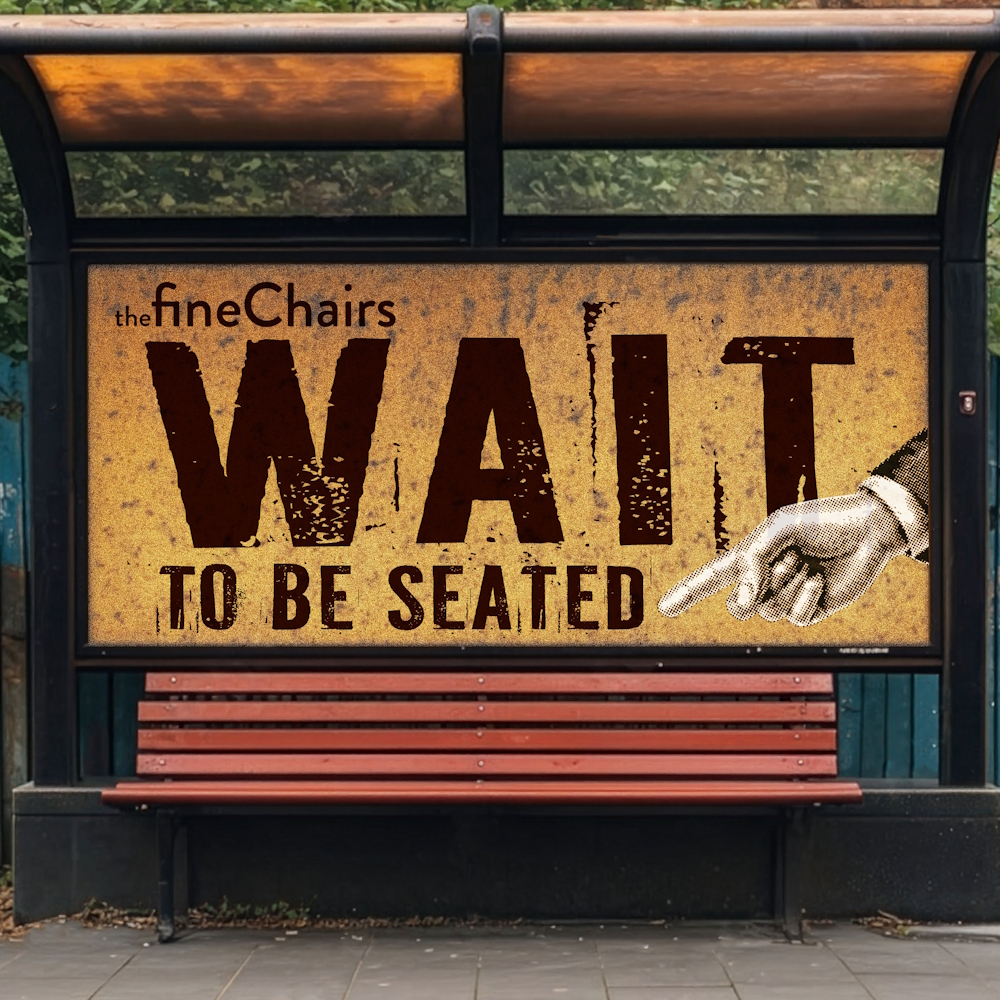
Emerging from the vibrant pulse of Hamburg, Germany, The Fine Chairs have produced a debut that is more declaration than introduction. Their 12-track odyssey, “Wait To Be Seated,” is a masterclass in “British Invasion” DNA, and it is very much nostalgic and very much now. At the helm is Sebastian Teufel, a songwriter who knows full well the importance of a soaring melody and a grounded lyric. Having spent the summer of 2025 carefully crafting his arrangements, Teufel’s vision is realized in a sound that is respectful to the heavies—the anthemic swagger of Oasis, the sophisticated, boundary-pushing harmonies of The Beatles. However, there is a very distinct German sensibility and a very “Hell’s Kitchen” edge to this sound that never allows it to veer too far into tribute. It’s an album that takes you on a ride through its shimmering guitar work and its rhythmic precision, which can only come from a band that is completely comfortable in its own frequency. It’s an album that embodies that magic lightning-in-a-bottle sound, where it’s just as comfortable sitting quietly in a room with your headphones in as it is in a crowded room with its wall of sound. As we look at the different levels of Wait To Be Seated, it’s clear that it’s not just an album with music; it’s an album with atmosphere and one that invites you to sit and listen and forget what time it is. Now let me tell you more about it!
Our number one song is called “Half the Truth”. The album gets off to a start that isn’t quite a bang but rather a nervous bass line that can only be likened to a heartbeat, accompanied by a dry snare from the drums. It’s noir from the get-go. The topic of the piece is about a man who knows he is in trouble but still refuses to let someone go and wishes this person would stay with him. It’s a classic “I knew you were trouble when you walked in,” but instead of being the victim’s POV, it’s from the perpetrator’s POV It’s also noteworthy that the musicality of the piece is marked by a vocal performance that remains low and conspiratorial. It’s interesting to note that the effect of this piece on the listener is to make them want to listen in and figure out what “half” of what’s being said is being withheld.
The third song is titled “Strength and Hope”. This song starts with a melodic, pulsing bass line that offers a rhythmic foundation for the song’s shimmering guitar melody to dance around. The song’s lyrics explore the idea of people leaning on authorities for strength and hope. By doing this, it seems that you might have sold your soul to them and have become a mindless drone. The vocals have a slightly more earnest feel to them, with a rasp that adds to the feeling of optimism. This song has a very grounding effect, as it is an anthem to those feeling weary without being overly sentimental.
The third song is called “The Best by Far”. The song begins with a catchy guitar hook that is unexpectedly cheerful compared to the previous songs. If you have been or felt like you’ve been told what to do and how to live your life, then this song is for you. The character in the song asks for just one thing: “Please show me the same mistake that I show you”. The musicality of this piece is defined by its tight sound and energetic delivery in the chorus. The guitars provide a rich texture and make this song feel expansive in nature, leaving the listener feeling refreshed and lighthearted.
“It’s Not What We’d Call Heaven” is the name of the next song. The Intro is dominated by quiet, scratching guitar rhythms that gradually evolve into a dark and brooding chord sequence in a minor key. The theme is one of disillusionment and deals with the idea of a situation or relationship that was initially perfect but is, in fact, stifling. It’s about the space between expectation and reality. The character in the song has rejected the saying that “time heals all wounds” because he is still very much in pain. The music is quiet and atmospheric, with vocals that are often double-tracked with a faint echo, creating a feeling of isolation and loneliness. The instrumentation is heavy on atmosphere, with long notes creating a sense of tension that never resolves, leaving the listener in a contemplative state of mind.
Next up is “Something Wrong”. This song has a sudden, driving drum beat and a low, growling guitar line, giving it an urgent, restless feel. In this song, the character tells us how the person he has trusted was pretending with him all along. He tells us how he has realized that his person was wearing a mask. The vocals are delivered in a staccato, rhythmic manner, again giving the frantic feel of this kind of intuition. The song has a lot of instrumentation, with a wall of sound approach to the chorus that has a visceral, gut-wrenching effect on the listener.
The next song is called “Living on Lies”. It does not simply begin; it breathes. You are immediately introduced to a subdued, rhythmic scratching sound from electric guitar strings, not quite a chord but a “chug” that builds anticipation for exactly four measures until a thick, fuzzy bass line is introduced. It is akin to being awakened in a room that is slightly too bright. The lyrical content is akin to an autopsy on a dying relationship in which both parties have agreed to cease telling the truth to maintain a peaceful relationship. The theme is akin to “the comfort of the cage,” in which we find a certain security in a lie rather than facing a truth that frightens us. This character then lets his partner know that he rejects living on lies. The vocal style is akin to a breathy, nearly whispered tone for the lead vocalist until the instrumentation builds with a crash of cymbals and a distorted organ sound, at which point the vocal style shifts to a strained, raw belt. The impact on the listener is akin to one of instant discomfort, causing one to examine one’s own “small talk” and facades in one’s own life.
Up next is “Time is Right.” After the tension of the opener, this song launches with a funky drum roll, heavy on the snare, followed by a clean, sparkling guitar riff that is very Pacific Coast Highway. The song’s lyrics, however, address the tension of perfectionism, even with a fast-paced beat. It is about that moment where you have the opportunity of a lifetime, but are too afraid to make a move because the timing is just too heavy. The character in the song is fed up with being in limbo with a person who can’t make up her mind, so he tells her that if she can’t make a full commitment, she can walk out the door. The musicality of this piece is very driven by a funky beat. The bass player is working overtime with some scales behind a vocal performance that is unexpectedly rhythmic and staccato in nature. It is like a shot of caffeine and a panic attack, but danceable and just fast enough to make the listener feel the tension of the lyrics.
Next is the track “In Beauty and in Grace”. This is the musical turning point of the album. It begins with a haunting, echoed guitar melody that sounds like it is being played in a cathedral. The theme is about the observation of a person, or perhaps a memory, that remains untouchable and beautiful even in a world that is falling to pieces around them. It is about the dignity in suffering. The artist drew on a personal experience to make this song, highlighting the tough time of dementia, where the person you love is slowly forgetting about you. There is not a lot of instrumentation in the first two minutes, focusing instead on a vocal performance that makes use of a stunning, delicate falsetto. When the cello finally kicks in during the second verse, there is a sense of mourning and emotion in this song, and this is the part of the album that most listeners will agree is the “emotional anchor” of the record.
“Rain in My Face” is the next song on the record. You’re immediately greeted by the unmistakable sound of a slide guitar, using the slide to mimic the fall of a teardrop, followed by a mid-tempo, bluesy beat. While this is not a “sad” rain song, it is a song about baptism by failure. The song uses weather as a metaphor for the struggles we can’t avoid, and it argues that it’s more honest to stand still in the rain than to seek shelter. The musicality is reminiscent of “Swamp Blues” but with an indie twist, utilizing lots of “room sound” in the drums, making it feel as if the band is playing right in front of you. The vocals are gritty and low, residing at the bottom end of the range for the singer, and it makes the listener feel grounded, offering a strange comfort in knowing that things can’t get much wetter than they already are.
The next song is “Through Empty Space”. This intro is strictly atmospheric, building synth pads and a distant echoing feedback loop that sounds like radio signals from a lost satellite. It is the most “experimental” opening on the album. The theme is existential loneliness, but not sad loneliness; cosmic loneliness. It is the knowledge of how small we are in the grand scheme of the universe. The song is built on “ghost notes” and atmospheric guitar plucking that never quite resolves to a traditional 4/4 beat. Vocals are layered with heavy harmony, creating a “choir” sound that makes the vocalist sound like they are shouting into a void and hearing themselves back. It is a feeling of awe and insignificance in the listener, a literal “space” to breathe from some of the more crowded songs.
The eleventh song is called “You Did Never Try”. The song opens with a strong piano melody that is breathtaking. The lyrics are a confrontation, a simple accusation. It is the moment of realization that someone, whether a partner or friend, has not failed because they were unable to, but because they just did not have enough interest in trying to accomplish it. The vocals are the most energetic performance, as they feature a “call and response” style, where the lead vocals and backing vocals trade off. The instrumentation is thick, as the dual-tracked piano melody builds a wall of sound that feels oppressive. To the listener, it is a cathartic release, the song you play when you have finally had enough of making excuses for someone else.
The album wraps up with “Feet Upon My Shoes”. The album ends with a slow rhythm, an acoustic strumming pattern that feels very intimate and “unplugged.” It feels as if you can hear the fingers moving across the frets. It is very intentional, very raw. The message is about being trapped in a situation where you’re limited and cannot spread your wings and fly because, like the lyrics say, “when someone is standing on your feet, it’s impossible to run away.” The musicality is very wild, upbeat, and very captivating. It is a very vulnerable, very quiet ending, leaving the listener in a state of reflection. It resolves the tension of the entire album, admitting that, at the end of the day, we all need someone to help us walk.
Arriving as it does on January 22nd like some necessary, pulsing heartbeat, *Wait to be Seated* by The Fine Chairs is, of course, more than just a collection of songs , it’s a sonic reflection of the beautiful, jagged contradictions of our modern life. And at the very heart of it all is Sebastian Teufel, polymath that he is, with fingerprints on everything from the architecture of the songwriting to the very pulse of the record as he takes up the mantle of both drummer and bassist on several of the tracks. “Wait to be Seated” was born in their own “Hell’s Kitchen” studio in Hamburg, and that feeling of controlled heat can be heard in every note of the record. From the initial needle drop to the final fade out, the record will not let you go. It is that rarest of gems, a “no-skip” record that demands to be heard in one sitting. It’s an album that doesn’t simply ask you to listen to it, but invites you to stay, leaving you with a lingering, restless hunger for what The Fine Chairs might build next.
Stream the “Wait To Be Seated” album on Bandcamp.
Follow The Fine Chairs on Facebook

- STANDING ON BUSINESS IN RED HEELS: WHY REIGNS’ “HEELS RUNNING” VIDEO JUST FORECLOSED ON POP - 18 September 2026
- A LESSONIN REDEMPTION: MICHAEL WATERS LEAVES US COMPLETELY SPEECHLESS WITH “WE’RE MUCH BETTER PEOPLE NOW”, A BREATHTAKING ANTHEM OF ACCEPTANCE AND HEALING - 18 September 2026
- BEYOND THE MACHINE: SEHORE REDEFINES SONIC GENIUS WITH THE HYPNOTIC SPELL OF “IA” - 18 September 2026