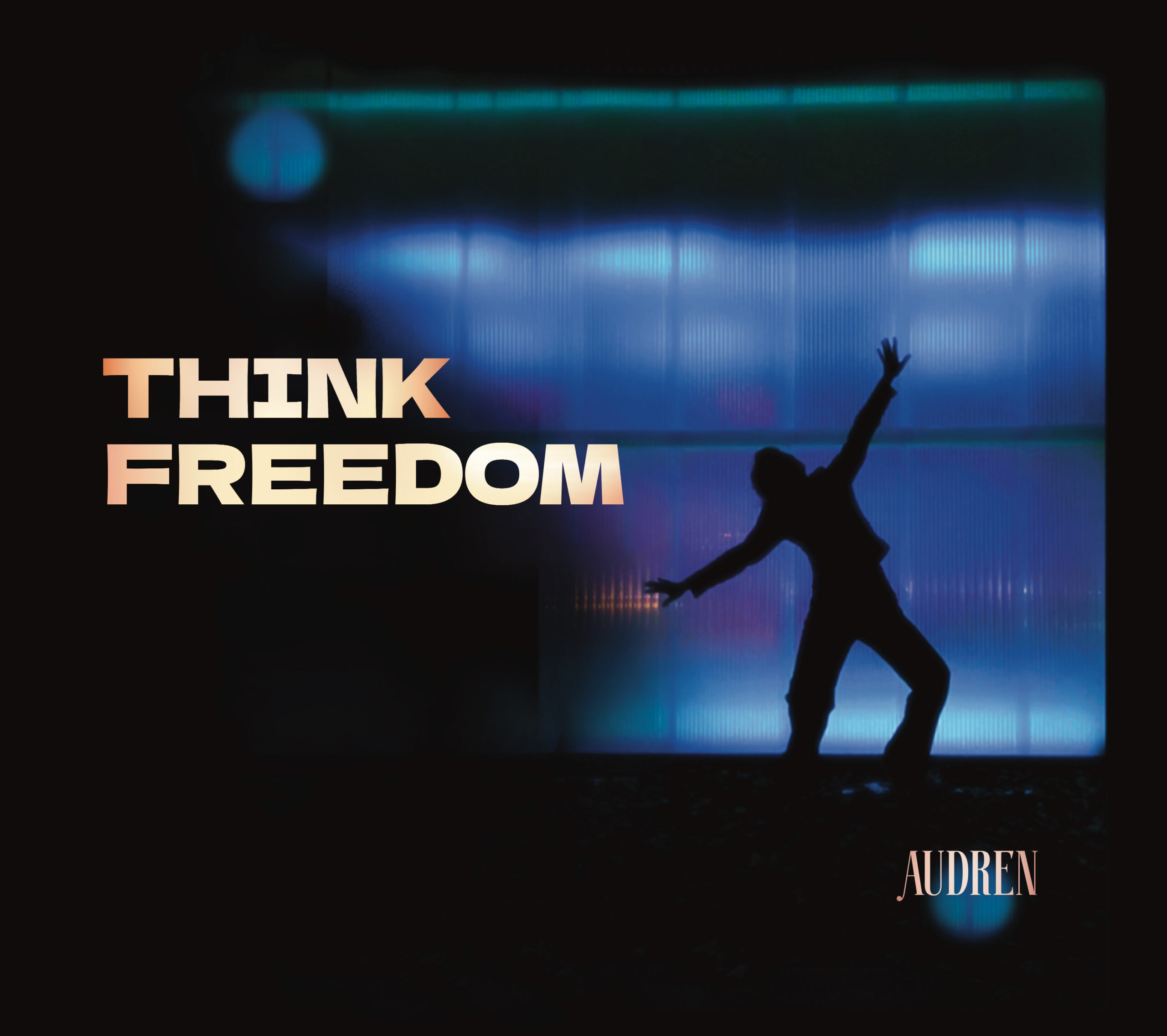
We feel honored indeed to once again be treated to music by the ever-amazing and reliable sound sorceress Audren. For years now, her music has been an essential source of sunshine for us, instantly uplifting us and shielding us from any coldness in our hearts, indeed, a very welcome addition to a world in dire need of some much-needed positivity. To those of us who have seen her grow and develop over time, we can never forget the impact of songs such as the addictive and groove-infused anthems “Smile, people Smile” and “We Want Funkey,” which took our hearts by storm and solidified Audren’s position as an artist who creates euphoria-inducing music. Here, Audren comes back to us with a glorious and complete album called “Think Freedom,” a wonderful eleven-track collection which was released on May 15th. With this album, Audren gives us the final proof of her immense talent, a beautiful tapestry of sound which serves as evidence of liberation and creativity, proving that Audren is performing at her finest. It is also important to know that Audren’s daughter Jemily Rime plays the bass in “A new Page”, her other daughter Sydney Rime wrote and played the piano part of one of the songs “Flowers in the snow” and the musical producer is her partner Chris Rime, Her mastery of music cannot go undiscussed in this case, and we need to analyze this fantastic album in detail, because the creator herself gave us something worth analyzing.
The opening track begins with the album’s “A New Page”, which starts with an abrupt shock for listeners since it does not follow the tradition of a bombastic opening. However, the track starts with a rather personal and very naked guitar intro, as if the sound is being tuned in some space, thus creating a feeling of isolation right from the start. Afterward, a few layers of vocals enter the mix softly, in the form of close miking and vocal harmonies. As for the track’s themes, they address the inner struggle of rebirth within oneself, namely, the actual fatigue of moving away from one’s traumatic experiences and the fear of facing the unknown. The character in the song yearns for the courage to have a new page or get a blank slate for her life. This song is something that we all think aloud that Audren has communicated with her beautiful voice and amazing artistry. Musically and Vocally, the singer performs with softness and intimacy, preferring light whispering to heavy vocalization. Musically, the acoustic guitar becomes progressively more powerful due to strings entering the sound mix.
The trip leads naturally into “The Good Road”, which opens with a low, mood-setting electric guitar riff, suspended in mid-air, setting up a contemplative atmosphere before a deep, throbbing bassline kicks in. The song talks about fate, micromoves, and the fear of trying to live in a world where the result is completely unpredictable, and asks you to take a peaceful place in the midst of it. It is the persona in the song’s hope that one day, she will be back on the good road, which signifies everything going well or as planned in one’s life. Instrumentally, the track uses a strong rhythmic drive, where the beats click and pop around a solid groove. Vocally, the track has one of the most relaxed vocal performances ever, using perfect timing and playfulness to create a laid-back melody. The track adds more and more layers of retro synths and rhythmic guitar plucks to the mix, giving the song a hypnotizing feel that makes the audience feel like a late-night driver who needs patience and peace of mind.
The energy transitions into a completely different form in “When Freedom Dies,” starting with an unnerving acoustic strum in a minor key, accompanied by a contemporary and beautiful bass sound by a real player. It is a deep, philosophic protest song that explores the concept of individual freedom and the dangers of conformity, urging people to resist conformity because those who set these rules lie. She asks that we choose what is right for us because we know what is right for us. In terms of vocal delivery, it begins with a subdued performance in a dark, low range but culminates in a commanding chest resonance at its peak. Musically, it is a stunning combination of old-school bluesy guitar lines interwoven with a dramatic orchestral arrangement, resulting in an enormous sound that feels both timeless and current at the same time. This is a breathtaking experience; it makes you feel strongly about defending yourself against any attempts to suppress your inner voice.
Next is “Smile, People Smile”, a song that I’m quite familiar with. It begins with a heavy bass that goes straight to the spinal cord, making it impossible not to move to its beat. The song starts like a firework, fusing the charm of the 70s and the flair of the 80s in one unstoppable melody. It is the perfect illustration of auditory gravity, with not a single word sung, yet the music exudes an energy that makes one want to dance. When it comes to theme, there is an inevitable burden attached to the “grown-up” routine, an unending series of burdensome news stories, the pain of being physically tired, and the tediousness of even simple tasks like paying taxes. However, there is that yearning for simpler times in each of us, but it acts as a refreshing intervention to break the gloominess. Although growing up can definitely be difficult, that does not mean we have to wallow in our blues forever. Rather than a map pointing to the major landmarks, the song functions as an audio guide that helps us look at the minor moments of joy that help us appreciate why the travel is worth it. It invites us to take a short pause from the role-playing to find a connection with the sense of wonder once again. Through its celebration of the “little things,” it gives us humans a pattern of what we can do to be resilient in our daily lives, where we do not need big moments to make us happy.
For the song “We’re all Lost”, the pace becomes very slow indeed, with a naked introduction that has only one element, which is a solo rim-shot click with a deep echo and a wide-sweeping sound of the synth that recreates an empty land in its emptiness. The theme is the expression of empathy and sympathy to the fact that everyone can feel lost sometimes, thus making it clear that being lost is a natural part of human existence and not some kind of fault or mistake. Musically, there is no trace of conventional songwriting here – the composition goes on slowly with an emphasis on the atmosphere rather than lyrics or melody, and the performance of the vocals is rough, naked, and up close to the microphone, thus giving listeners the sense of privacy.
“We Want Funkey” is up next. The song hits the ground running with an aggressive, highly syncopated funk guitar hook and a driving, rapid-fire high-hat pattern that establishes a blazing pace. There is an inevitable burden attached to the “grown-up” routine, an unending series of burdensome news stories, the pain of being physically tired, and the tediousness of even simple tasks like paying taxes. However, there is that yearning for simpler times in each of us, but it acts as a refreshing intervention to break the gloominess. Although growing up can definitely be difficult, that does not mean we have to wallow in our blues forever. Rather than a map pointing to the major landmarks, the song functions as an audio guide that helps us look at the minor moments of joy that help us appreciate why the travel is worth it. It invites us to take a short pause from the role-playing to find a connection with the sense of wonder once again. Through its celebration of the “little things,” it gives us humans a pattern of what we can do to be resilient in our daily lives, where we do not need big moments to make us happy. Musically, Audren makes soulful and personal Indie Pop/Jazz/Neo Soul Music with highly sophisticated arrangements by top-of-the-line musicians such as Christian Martinez (Ray Charles, Diana Ross, Natalie Cole), Roger Biwandu (Salif Keita, Joe Zawinul), Mike Rajamahendra (Michael Bublé), Chris Rime (Marcus Miller), and Federico Malaman (George Benson, Al Jarreau, Wilson Pickett, Kid Creole).
This song places the album in an emotional trough with “Flowers in the snow”, which begins with the devastatingly beautiful, lonely melody of a piano, which gradually weaves itself with the soft, somber tune of a piano. In essence, this track acts as the centerpiece of the whole album, since it gives the reader an extremely poetic take on the hidden difficulties of the marginalized community struggling for survival in the harsh, indifferent world surrounding them. The song tells us a story about a character who shows the resilient nature of humans as a whole. In terms of its musical elements, this track relies on an exquisite orchestral performance with swelling strings making tragic waves in response to the poignant lyrics. The vocals themselves are incredibly vulnerable, with plenty of airy silences and true compassion conveyed through them. The effect is simply mesmerizing.
A feeling of cool confidence returns in “A Beautiful Move,” which starts with a clean jazz-style guitar lick over a solid trip-hop drum groove at a midtempo pace. Lyrically speaking, this track explores the strength it takes to realize you’re in a toxic situation, break free from it, and make the transition into something new with grace and dignity. Musically speaking, this song features some truly beautiful genre-bending instrumentation, including old-school soul pop vibes, bright and rhythmic organ sounds, and an extremely groovy electronic undertone. Vocally, this is one of the most controlled songs out there, with a beautiful balance of low-end confidence and head voice soaring on the hook.
The song “Big Boomerang” has a darker turn towards the rock genre, with a hard, heavy drum beat and a rough, distorted guitar riff. It is a hard-hitting song about the consequences of one’s actions as dictated by karma and universal accountability. The lyrics ask us not to keep quiet about our thoughts. It asks us not to beat around the bush and have the courage to talk about things that are happening around us. Musically, it is a cool song with a nice jazz vibe. This can be felt in the hard, clashing bass lines with the cinematic symphonic stabs. Vocally, this song is incredibly rough and hard-hitting, with an impressive, authoritative belt from the singer.
Unexpectedly, the album becomes more theatrical from “Si Tu Veux, Monsieur”, with an outstanding intro. This is the album’s most avant-garde and experimental song. With its playful combination of English and French lyrics, the song touches upon themes of romance and boundary setting, defiance, and the disdain of patronizing attitudes. The music composition itself is highly advanced, characterized by complex rhythms, a highly technical approach, and sophisticated use of bass runs, acoustic folk, and rhythmic syncopation. Vocally, the piece presents a brilliant exercise in the art of personality. Full of theatrical charm, independence, and charisma, the singer effortlessly handles the complicated jazz harmonies. Overall, the song serves to create a highly engaging narrative that leaves the listener captivated.
And the album ends the entire project on an absolute high with “True Love”, which starts off with an incredibly vulnerable duet performed between a voice stripped bare without any effects and just a strum of a warm, soothing acoustic guitar. Thematic depth in the end comes with the complete realization of the album in that unconditional and selfless love towards oneself, mankind, and the world at large is the highest form of freedom possible for anyone. The song builds up to epic and majestic heights with an orchestra, screeching electric guitars, and a chorus wall made of backing vocals. It is simply incredible in the way that the vocals shift from a comforting lullaby to a powerful and earth-shattering gospel-style song.
Coupled with beautiful lyrics that speak right to our hearts and an amazing and awe-inspiring melody, “Think Freedom” acts as a poetic mirror reflecting on the harsh world around us while offering up an invitation to smooth out its harshness and remake it into something truly great. The songs “A new page” and “A beautiful move” both contain a symphonic orchestra that is to die for! What more can be said to do the album justice? I approached this listening with high expectations, for which I am no stranger; she has completely broken and surpassed my highest expectations in countless ways. Audren has this uncanny way of instantly adding some spirit and hope to all of our spirits through music that brings us just what we need in life, making us incredibly grateful for her talents. I absolutely adore this album, and it will prove to be a monumental work in her catalog. I eagerly await what she will do next musically!
Stream the “Think Freedom” album on Spotify.
Follow Audren here and her socials: X, Facebook, Instagram, TikTok, YouTube

- UNAPOLOGETICALLY HONEST AND INFECTIOUSLY SEXY: WHY DREA DOMINIQUE’S “ROLL” IS THE R&B MASTERCLASS WE NEED - 24 October 2026
- SOUTH LONDON LEGENDS DEPTFORD SOUND COLLECTIVE DELIVER A MASTERCLASS IN SOCIAL COMMENTARY WITH EXPLOSIVENEW SINGLE “WHOVERWINS AI WINS” - 24 October 2026
- REFLECTIONS “OH HUMAN DESTINY”: SERGIY BOLOTNY’S BREATHTAKING NEW SINGLE IS A VIRTUOSO TRIUMPH - 24 October 2026