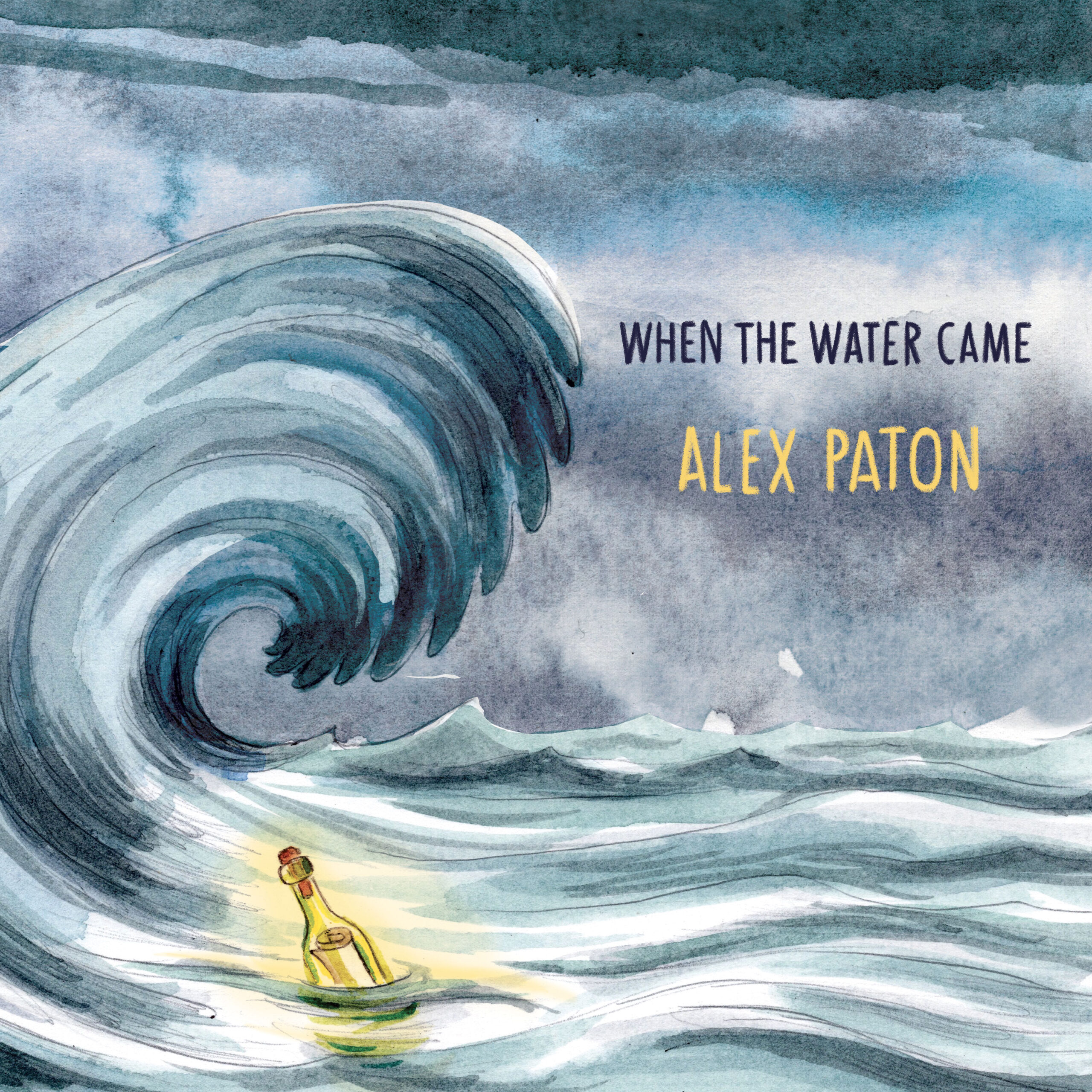
It is our great pleasure to be able to shine the spotlight on the amazing talent of Alex Paton, a brilliant Parisian composer whose works always manage to break free of the confines of regular compositions. As a talented musician and composer with an unusual gift for making silence tell a story, Alex has been making music like no other and using his skill to bring sound and movement, theater and cinema together in an impeccable way. Alex’s newest release, the 5-track EP entitled *When The Water Came*, released on the 12th of June, is nothing less than a true auditory experience. It is my great pleasure to introduce you to the fascinating world of emotions and instrumentation in Alex’s latest creation.
It starts with a song titled “Underground,” which creates a sense of underground and a cave right away. This particular track does not begin with a melody, but rather with a beat, which is very much like the rumbling of the earth or the heartbeat of the earth. In the process of developing this song, the beat is accompanied by synthetic sounds that radiate as if the sounds are ripples in a dark well. The music in the song has a very tactile quality in that it is possible to actually feel the dampness in the air and the pressure in the setting he describes. There are no words in the song, but the ethereal mouth percussion sounds do a fantastic job of telling listeners a story, and we can connect more deeply with the song.
In “The Call in the Mountains,” the soundscape takes a turn towards the epic and the trembling. It begins with an acute sound of the flute, violin, and ethereal synth sounds, which pierce the silence in the same way as a gust of air at great heights. It is in this track where the EP loses all its heaviness, and melody becomes grandiose, cinematic, and terrifyingly beautiful. The song has no lyrics; I think it stands for the temptation of loneliness and the awe-inspiring power of those mountains that do not care about humans. From the musical point of view, the composition is absolutely laconic. It gives the opportunity for a listener to live through the pauses between the sounds. Paton’s handling of the space is his real instrument.
Next up is “Fires and Floods,” the most intense and chaotic movement within the suite. It begins with a glacial synth-like piano ostinato evocative of dying embers from a fire and swiftly gives way to an assault of distorted strings and an avant-garde beat on the rise. What follows is a trumpet solo that was very exciting to listen to. It is an exhausting and awe-inspiring piece of music, which provides no comfort to the listener. Its sound is deep, percussive, and layered with dissonance, mirroring the struggle between two opposing forces of nature. It is an evocative look into how we survive when the world around us chooses to restart, leaving the listener gasping for air.
By the time “Un’Onda” flows over the listener, the tone of the song becomes that of total, melancholic resignation. “Un’Onda” starts with the soothing, flowing sounds of bowed cymbals and a gentle cascading of a harp’s arpeggios – the kind of light that shines through murky water. It is a song about accepting the surroundings; whereas the previous songs have been about the brutal nature of the environment, this is about the need to adapt to it. The vocals are ethereal and shimmering, flowing back and forth like the tide itself. This is a peaceful interlude that seems delicate, as though the song will vanish if listened to too intensely. The orchestration in this song is particularly lavish.
In conclusion to the EP is the track “When the Water Came”, a seven-minute-long epic that stands as the concluding reconciliation of the album. This track opens up with a beautiful piano melody that grows more cinematic throughout the song. This is one of the darkest, processional songs in the entire EP that plays with slow but heavy gracefulness. There is a high degree of musicality in this song in the form of polyrhythms and haunting long-form melodies that seem to make you breathe your last breath slowly. It leaves one stunned, in awe of having completed an epic journey into a different world that now exists around them.
It would be unfair to categorize “When The Water Came” as a mere commercial production because the reality is far different, and it is actually a very deep artistic creation that goes beyond the traditional limitations of an EP. From the first moment of listening, the album opens up like a very dense musical tapestry woven with many different elements and melodies that stay with the listener through vast soundscapes of a cinematic nature. This album is rare for being one that requires complete attention from the listener because it has an urgency about it that is fresh as well as challenging. The artist’s inspiration has come from the volatile nature of our surroundings, the destructive power of fire, the overwhelming power of water, the ethereal quality of air, and the powerful energy of a landslide. It is through the harnessing of these fundamental forces that he has created a sound alchemy that cannot be limited to just one style of music, but rather a more fluid approach that serves to guide you through a visceral, life-changing journey. This album truly is a masterpiece, the type of work that is dynamic and alive, evolving every time it is played. It is a work that I am already going back to again and again, and I am eagerly waiting to see what comes next from this man’s incredible imagination.
Stream “When The Water Came” on Spotify
Follow Alex Paton here and his socials: Instagram, Bandcamp, YouTube

- COREY MORRIS DAZZLES WITH “BEFORE THE SHINE,” DELIVERING A MASTERCLASS IN RAW SOUL AND UNAPOLOGETIC ARTISTRY - 18 August 2026
- MILYAM’S “DREAM” IS A HYPNOTIC MASTERPIECE OF SURVIVAL, SOUL, AND DIVINE FEMININE POWER - 18 August 2026
- “SITTIN’ HERE THINKIN”: GEORGE REDEFINES SOULFUL ALT-ROCK WITH UNFLINCHING GRIT AND HEART - 18 August 2026