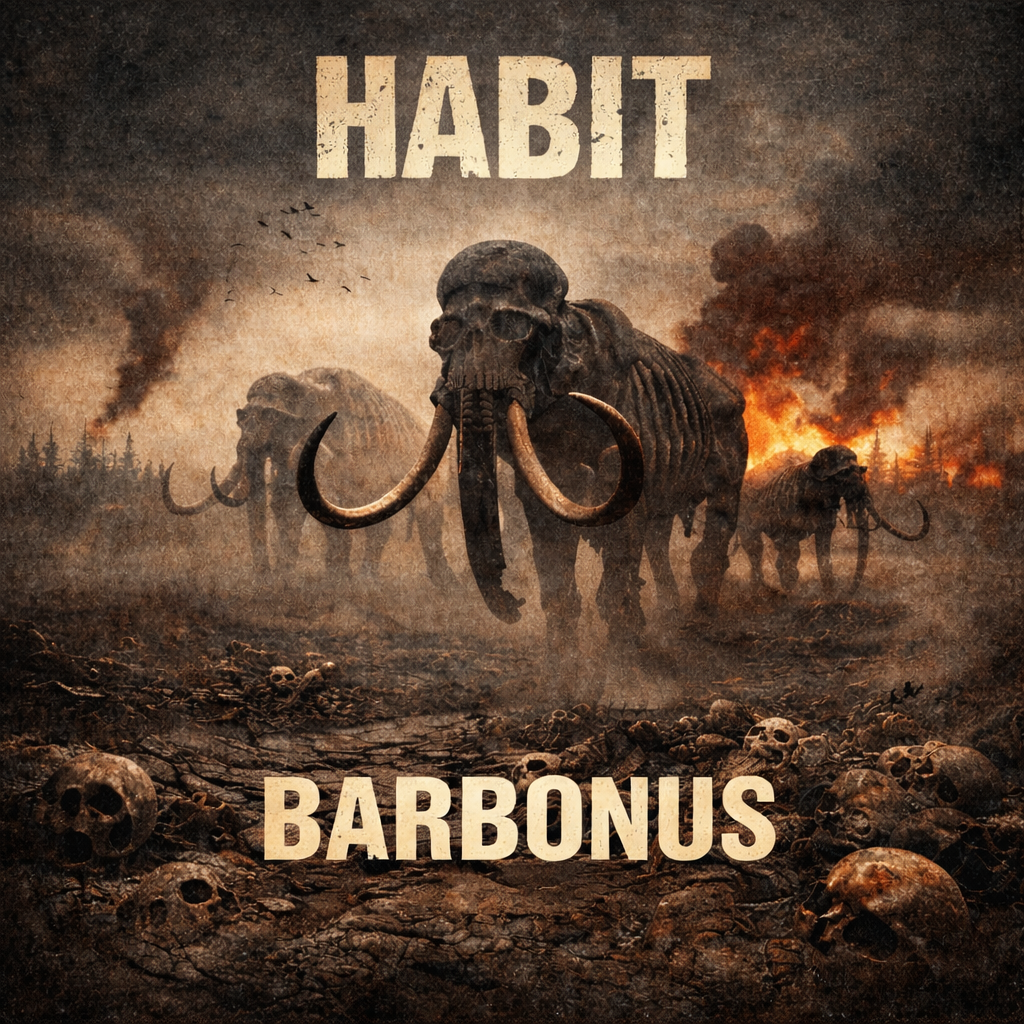
It’s so thrilling diving into Habit. The reason why Barbonus is such a special entity in the electronic realm is his unwillingness to reduce the synth sounds to something that can only happen on the dancefloor. He considers sound design as one of the most powerful tools of narrative. After the dusty tape machine vibes of Demos ’96 next to Klarstein, rocks, and the archival horror of Unearthed, which was done together with Vela Sorell, Habit seems to be the final masterpiece that Barbonus created. He used the heartbreaking, prose-driven intimacy of Fire And Distance to create an architectural masterpiece of human resilience through eleven songs. We’ll analyze this stunning album in detail, exploring how each song starts, revealing all the psychological secrets hidden behind the prose, and rethinking it through its brutal musicality.
The song “No Agreement” begins with an abrupt and unedited recording of something that sounds like footsteps, namely the sound of leather shoes clicking rhythmically against a hollow wooden floor, combined with the faint hum from nearby fluorescent lights. Following the few seconds of physical sounds, there is a very harsh, highly compressed, and bass-heavy electronic beat with a strict metronome pace. As per the lyrics, “No Agreement” exposes and reflects the intense inner conflict between what happened in the past and what will happen to humankind at the end of life. We are reminded that when it comes to something like the extinction of mammoths, we cannot agree on what killed them, we cannot agree on whether it was fire or ice that called them. From a musical perspective, the vocal delivery is a great lesson in how one can strip the emotion out of something by delivering it in a flat, spoken-word manner, which seems to entirely lack any sense of the dramatic anger that would otherwise have filled it. The instrumentation for this song is extremely minimalist, opting to have the rhythm section bear all the weight of the song, using a mechanized, repetitive drum loop as well as icy synth pads that gradually build and fade away in the background. It serves as an incredibly disquieting reflection of those times in our lives when the only possible answer is to accept that there is no longer any ground left to stand on.
The song “Behind The Door” opens with an intense, thumping synth sound. These sounds are immediately drowned out by a sublime analog synthesizer playing an arpeggiated pattern in a circular motion. The theme of the song revolves around the compartmentalization of traumatic experiences and the hidden worlds within us. Lyrically, the song touches upon the contrast between the persona created for society and the chaos that ensues when one is alone, locked behind closed doors. The voice is very rich in its layering effect in the use of a very low-quality radio signal through which the voice is distorted, as if it’s sending out an SOS call from within the depths of a dark and empty room. The instrumental music used in this track is very rich in effect, although it’s all covered up in some way. For example, there is a very strong and rhythmic bass line that sounds like an anxious heartbeat, along with some sad and lonely piano chords that emerge from the shadow of the thick synth lines.
Track three introduces itself with the crisp ticking sound of a traditional grandfather clock, immediately followed by an aggressively distorted and stuttering drum machine rhythm that seems deliberately chaotic. After the chaotic opening comes a refreshingly calm mid-paced rhythm from the electro-pop genre. “Overfed With Nothing” represents a harsh and intelligent commentary on the current age of consumerism and technology. The song lyrics analyze the irony of the modern era of existential emptiness, wherein everything is abundant in terms of content, notifications, and choice of material, but we lack true purpose and spirituality. There is an effortless transition into a tired, repetitive rhythm that imitates the swift, heartless scroll of a social media feed and delivers scathing irony with flawless elegance. There is no finer way in which the music backs up this idea of emptiness than through the use of generic and intentionally sterile sounds produced by synth instruments, punctuated by breathtaking and authentic strums from an acoustic guitar. The listener experiences an enlightening moment of clarity. This is truly how you feel when you stare at your phone late at night, full to bursting with knowledge, but entirely devoid of any sense within.
Bucking the trend of synthesis, “Silence” opens up with a surprising and entirely natural-sounding audio element; that of the subtle crackle of a vinyl LP spinning to its very end with an accompanying sound of windowpanes trembling due to the gusts of autumn winds. The topic of this song focuses on the burden of the things that were never expressed and the frightening security of emotional numbness. Instead of seeing silence as a peaceful condition, the lyrics describe how such silence, used as a form of manipulation, can destroy a human relationship, leaving one’s safety in exchange for suppression. The vocals are breathtaking in their rawness, performed in a very vulnerable manner with near whispers, sitting directly in the center of the mic, recording breaths and exhaustion from vocal strain without any studio treatment. The instrumentation perfectly reflects the song’s title by reducing the soundscape to the very basic elements: one rich, low bass note and a slow-moving synth pad. What the effect is on the listeners is breathtaking heaviness. It compels the listener to acknowledge the noise of their fears that come roaring up when distractions cease, turning minimalism into a mirror reflecting emotions.
“‘Africa Will’ starts with a lush, warming background of nature’s ambient sounds: the clear chirping of the crickets as night falls and the slow, echoic thumping of a wood hand drum struck softly in a courtyard somewhere outside. This grounding opening is then carried by a soaring chord played on a light, translucent synth that rises above like a sunrise. In terms of content, this track takes a much more expansive, contemplative turn towards its historical and cultural implications. The lyrics take a step back from focusing on individual daily activities to reflect on resilience, culture, and the history of a continent that continually forges its identity after decades of exploitation.”
The vocals here are breathtakingly soulful, from the coldness and detachment of before to a passionate, reverberating, and chanted style that evokes strong feelings of community and heritage. The instrumentation is absolutely fantastic, representing a great fusion from across continents; the electronic drums and rhythm section fade out to allow room for complex rhythms, percussive shakers, and an exquisite bass guitar melody to shine. What happens is a powerful wave of strong emotions and a sense of pride. It is simply an amazing breath of fresh air right in the middle of the album, reminding everyone that even amid routine and hardship, a never-ending historical pulse of hope remains.
It is brutally disrupted when “Sirens” abruptly comes through with the sudden sound of a high-pitched, rhythmically intense siren of a passing emergency vehicle in an urban city setting, along with the sounds of the chaotic and low-end rumbles of bustling urban traffic. The street noise becomes suddenly captured in the context of a fast, aggressive beat of techno-pop music. Lyrical content revolves around the experience of being perpetually anxious and on edge, which has now come to typify life in an urban environment today. The pace of singing in this song seems extremely urgent, rushed, and tightly strung, reflecting the feeling of desperation felt by an individual who is trying to avoid getting into an episode of panic. The instrumental soundscape is extremely thick and manic, as well as highly industrial, with the sharp tones of saw-wave bass synthesizers and heavy kick drums at its core. Listening to this song gives the sensation of the heartbeat accelerating and the mind focusing.
“From Pontius To Pilate” sets up its sonic backdrop with a somber liturgical mood, the deep echo of one cathedral bell against the backdrop of a low-sounding, ancient synth drone. This song is about an absolute plunge into institutional betrayal, the passing of the buck from bureaucrat to bureaucrat, and the complete shirking of individual responsibility. Using the metaphorical basis of the title, the lyrics illustrate how the individual of today keeps washing their hands of their moral obligation, passing the blame down an infinite line of middle management processes, while people suffer. It is a chillingly clinical performance that delivers harsh poetic criticism in an almost judicial manner. There is a stunning cinematic performance in terms of the instruments used, with a stiff, marching drum track from electronics, a very powerful and distorted synth bass, and cold, icy synth melodies that sound like string instruments crying in a vast, empty auditorium. The effect on the audience is both profound and challenging. This is an intense moral mirror that forces one to look at how quietly one could be participating in perpetuating the injustices within their habitat.
As the thick and heavy darkness of institutions dissipates, “Roadside” opens with the light clicking of a car cassette player beginning to play. This is then followed by the soothing hiss of a fast-moving vehicle traveling through a nighttime road. On top of this backdrop, an undulating fender rhapsody starts flowing gently. The song is about the ideas of transience, escape, and the tranquility that can be felt when displaced entirely. The lyrics are concerned with the idea of the road as a sort of neutral place, a middle ground wherein you belong to neither the past nor the future, but have an enlightened moment amidst the passage of the outside world from the confines of your dirty car window. It is an amazingly chill, close, and conversation-like vocal performance. It feels as though the performer is singing very casually while addressing their buddy who sits in the passenger’s seat next to them. The use of instruments is quite analogous and cozy. It includes the smoothest of walking basses, the cool and laid-back jazz rim shots on the snare drum, and the most amazing atmospheric sounds of the synth, which seem to remind you of the street lights along the highway. This song affects its audience emotionally through the feelings of nostalgia. This vocal delivery is totally unrefined, lethargic, and conversational, recorded in a way that gives a feeling of a person not even fully opening their eyes yet. The instrumental aspect fully captures the physical sluggishness with the help of extremely slow and lazy rhythm, soft and pillowy bassline, and cozy synthesizer layers that surround the listener with something similar to a quilt. The result is immensely soothing and encouraging. The song removes any feeling of guilt when you can’t help but be lethargic because of the very idea of dawn appearing after such a long and exhausting night.
The second-to-last song, “From Midnight Till Dawn,” starts with the subtle ticks of a wristwatch, quickly followed by a heavy sub-bass beat and the syncopation of a hi-hat that reflects the underground ambiance of a nightclub. The song revolves around the bizarre economy of the nighttime, where normalcy fades away and lonely figures such as insomniacs and creative night owls form a sort of peculiar community because of their loneliness and detachment from regular society. The lyrics bring about a portrayal of an entire city sleeping at night, while a secret community of individuals who stay awake keeps watch of each other through the hours of reflection and gossip. The singing in this track is very smooth, hypnotic, and nocturnal – the voice seems to float along with the groove effortlessly. In addition, the instruments are an excellent tribute to minimal techno and dark wave electro pop music, as it is filled with an intense hypnotic bass line, echoing synth chords, and a strong rhythmic beat that makes this composition move at a steady pace, even in the dark. The effect on the audience listening to this song is absolutely captivating. This track takes the audience to that unique state of mind that can be felt only during the wintery nights, as it glorifies the company of those who feel comfortable only when everyone else goes to bed.
Finally, the album comes to its end with “Still Hoping (Just A New Year’s Song),” which starts off wonderfully with an organic piano tune accompanied by the natural sounds created within the room as the player hits the sustain pedal with their feet. This organic piece is gradually followed by a soft electronic bass line and an acoustic shaker. Overall, this final piece works as a sort of emotional resolution for all of the previous pieces on the album. The song is a vulnerable and imperfect expression of hope despite thirty years of routine and pressure, as well as the emotional distance that comes with such a lifestyle. In the context of the album’s themes, the lyrics state that, although the changing of one’s calendar year is artificial, the need for a new start is necessary for survival. This is the point where the voice performs at its most passionate and exposed yet powerful, stripping away all vestiges of earlier detachment to produce a soaring, soulful song that seems to envelop everyone around it in its collective arms. The music progresses to create an exquisite cathartic buildup, effortlessly fusing the tender acoustic piano notes with rich, orchestral synthetic layers and uplifting drums to raise the track above the fray. The effect on the listener is overwhelming emotion, resulting in tears as one experiences newfound hope. In doing so, this track changes the listener entirely, allowing him or her to leave behind the sterile world of the habit in which the album was created.
The experience of being there to see the emergence of “HABIT” is akin to witnessing a true artist at the height of his game. Making its debut today, this brilliant album from Barbonus represents his most tightly concentrated and cohesive work to date, one that left me, a longtime admirer, entrenched in the musical world that he has created, absolutely enthralled. It is no secret that Barbonus has had a unique ability to capture what it means to be human, and this album takes things to a whole new level altogether. He describes the modern psychological condition with the exactness of a poet and the sensitivity of a philosopher through a depiction of the subtle processes by which we cope with the oppressive environment of relentless noise, over-stimulation, and a toxic performance culture that never ends. Despite the elegant legacy of classic synth-based artists and the exquisite construction of high-class electro-pop music in his compositions, Barbonus has managed to skillfully steer away from the clichéd approach of a revivalist. Rather, he creates an entirely new emotional atmosphere where delicate, stunning melodies convey heavy emotions.
All pieces of this puzzle are indispensable, but some tracks, like the astounding “I Stay in Bed,” completely redefine the framework within which we can perceive emotional isolation as a passive and non-violent protest against an inhuman, soulless productivity culture. Finally, the curtain falls on the masterpiece “Still Hoping (Just a New Year’s Song)”, leaving us with a fragile, yet profound and resilient form of hope that seems to be far from conventional and is actually the fruit of our fight for survival. As Barbonus explains so aptly himself, “HABIT is not about the spectacular failure to agree. It is about all the subtle adaptations that happen ahead of time.” Having marched side by side through his musical journey and stood up for his artistic genius in every step along the way, I can proudly state that “HABIT” is his masterpiece, a testimony to a genius performing at the very apex of his craft.
Stream the “Habit” on Spotify

- KEESHA BLAIR’S “THE INHERITANCE” IS A TRIUMPH OF TIMELESS LEGACY AND SOUL-STIRRING ARTISTRY - 11 September 2026
- GUYVER7X3 CAPTIVATES WITH THE HAUNTINGLY VULNERABLE “HALF OF ME STILL WITH YOU” - 10 September 2026
- THE BASTAS PROJECT RETURNS TO CONQUER WITH THE TRIUMPHANT “HEAVY MACHINERY” - 10 September 2026