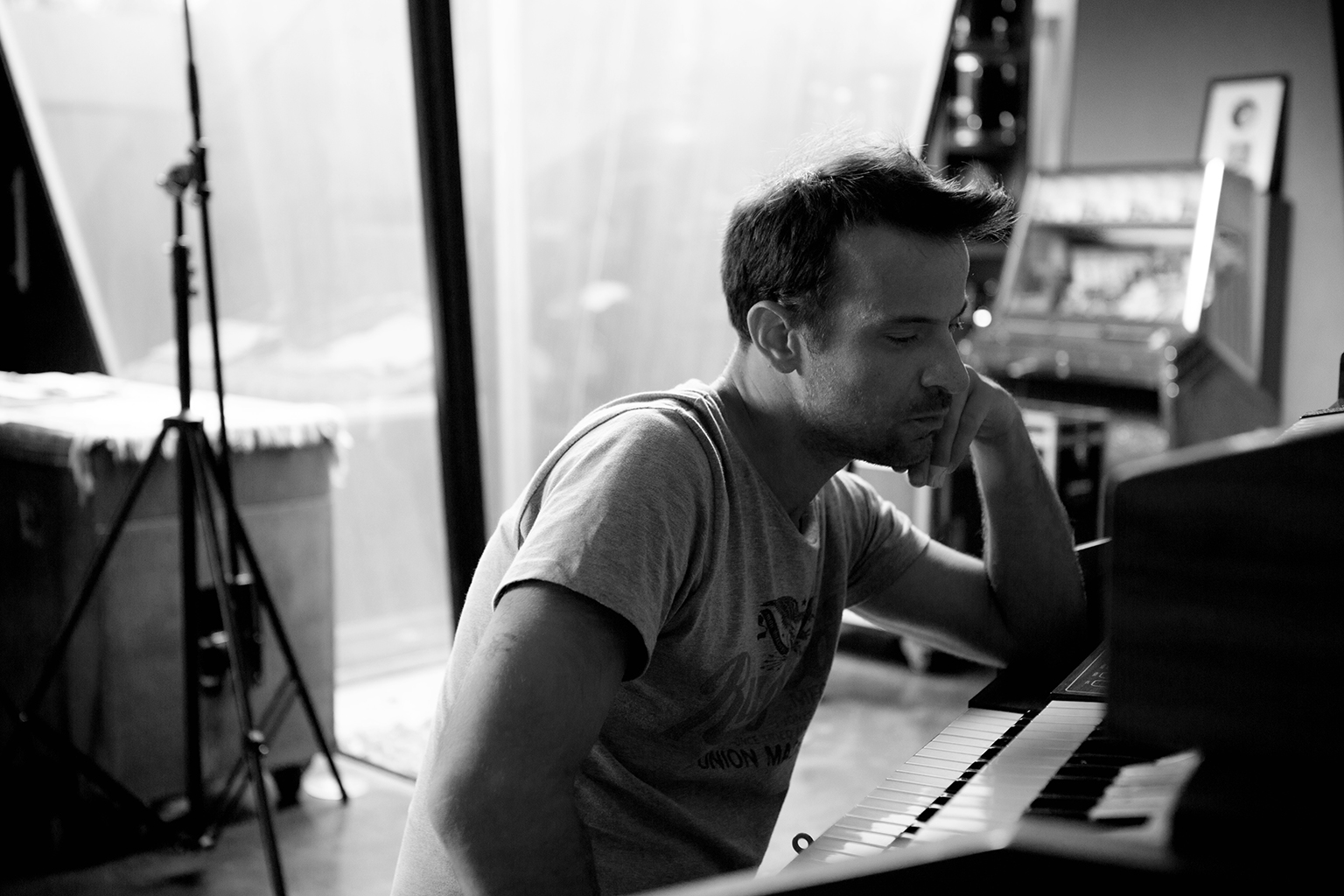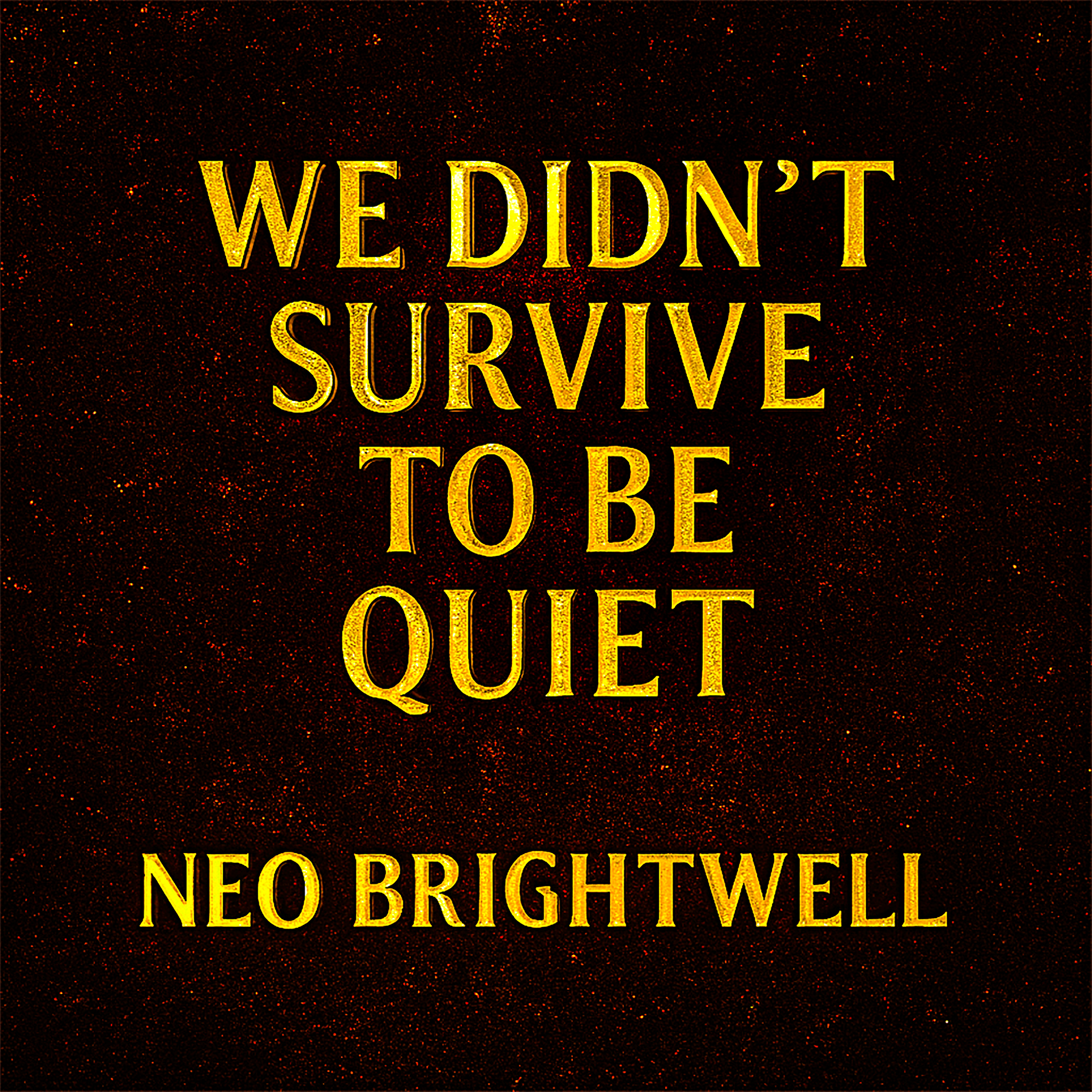
It is a pleasure to have Neo Brightwell back on the blog as we dive into one of the most anticipated releases of the year. If Neo Brightwell’s previous work, An American Reckoning, was the quiet, searing testimony of a soul under fire, then “We Didn’t Survive To Be Quiet” is the sound of that fire finally becoming a roar. Released on February 13, 2026, this odyssey of fourteen tracks is not only asking you to listen but demanding that you witness the case of Moonshine Disco, as defined by Brightwell, an evocative genre that feels like the gritty yet neon-lit oasis where the dust of an outlaw gospel meets the beat of the queer underground.
“The house is haunted, but it knows my name” begins with the low, guitar -hum floor-shaking boom of settling earth in the dead of night. From a lyrical standpoint, this song isn’t really about the supernatural, but rather the comfort of your own demons. Brightwell discusses the concept of your past not being something to fear, but rather something like living with a roommate you’re comfortable with. He tells us through the song that a room or a house holds a lot of memories. This song is a summary of the phrase “walls have ears. The musical arrangement is very claustrophobic at the beginning, like the very tightly harmonized vocals that burst forth into a spacious composition, reminiscent of the feeling of not living in fear of your past, but rather owning it. The song resounds with an eerie comfort aimed at the listener, the reminder that being “haunted” is really the notion of having something worth remembering. With this song, the album opens beautifully
“Ashes ain’t the end of it” begins with the distinct and rhythmic sound of a match being struck, followed by a gritty and soulful guitar riff. The track takes the concept of “post-traumatic growth” very strongly – one might say, the ashes are essentially fertile ground, not destruction in the wake of the flames. The “gray dust” on the hands of the singer, the “burn-out” that comes with the ashes, is seen by Brightwell as something to be worn as a badge of pride rather than something to be lamented at. It shows that we are resiliency of human nature. Musically, the artist used an arrangement that I have never heard before. It’s raw and fresh and listeners will fall in love with it
The song “The ghost that didn’t get to speak” starts off with a haunting, but distant guitar tune. The lyrics of this song are about “the marginalized pieces of ourselves, the pieces of our identity that we buried inside to survive.” The lyrics mention how the character in the song reminds everyone that he had been there, letting them know that he’s not see through. The way the song was performed brings to mind a powerful image of sacrifice. The song keeps to this distant, vulnerable melody until a dramatic and powerful string piece kicks in, giving voice to “the ghost” of the title.
The next song is ‘You knew’. It starts with a piano melody that feels like a whispered delivery. This song is about understanding between two people who have been through a survival situation a taking responsibility. It’s got nice musicality to it, making you feel like you are wrapped in a blanket of analog piano sounds . It’s a song that feels like a long-overdue hug.
“We didn’t survive to be quiet” is the name of the next track, perhaps more explosively, opens up with a defiant, guitar melody vocal colored in distortion, which subsequently breaks into a high-energy anthem. The theme, based on the lyrics “we traded our peace for a megaphone,” is one of rejection of “quiet” resilience. Rather, it’s an unapologetic demand for space and volume. The result is electrifying-the heavy percussion and the oodles of electric guitars create a “wall of sound” that makes the listener feel invincible, turning survival from passive to active, loud rebellion.
The song that follows is titled “I never had to rescue you” . The song starts off with a lively, acoustic-like strumming pattern. This song takes down the “savior complex,” and Brightwell sings about how their partner’s strength has always come from within. This song is about appreciating the uniqueness of the healing process for your loved one. Musically, it’s light, airy, and down-to-earth, and it’s a breath of fresh air after the previous songs.
“God gave me rhythm not rules” has a funky, syncopated hand-clapping rhythm and a groovy, meandering bass line, but otherwise the only thing expressed on the track is a negative view of legalistic spirituality, opting instead for a spirituality in motion. With the “dancing through the sanctuary” line, the content of the song falls into the category of finding God in the wonder of motion and joy, and the effect of the track is purely physical, a person can’t help but move their body in response to the music, and leaves the listener feeling free-spirited, and funky.
“Still here, barely” starts with the sound of heavy breathing and a melancholy guitar, and the lyrics are brutally honest about the toll of perseverance, concentrating on the repetition of “my knees are bruised from the landing.” This isn’t a winning song, but a song about the gritty fact of perseverance and not giving up. It’s sparse and tired, like the subject matter, and it’s a song that resonates with anybody who has ever felt like running on fumes has been their reality, offering a strange solidarity of fatigue.
Up next is “The ones who made it”. The song begins with a country infused melody that could only work in a parade. The theme clearly changes to one of community, embracing the idea of “we” instead of individuals. The song includes various types of survivors: the “quiet ones,” the “angry ones,” the “ones who forgot how to cry,” creating a tapestry of survivors. It is communal and empowering, with a choir-chanted chorus that makes you feel like you are part of this unbreakable family of humans.
“Your silence gets a seat too” starts with an ambient soundscape featuring water and a soft vocal performance intro that is very quiet. The theme of the song is that the unprepared do have a right to an assessment of their worth, as evidenced by lyrics such as “not every wound needs a testimony.” The pace of the song is contemplative, a safe space for the listener to just exist without the expectation that they need to perform or do anything about their current state of being.
“Algorithm ain’t a god” begins with a rodeo like melody that will make you feel like dancing cutting-edge and modern. It has very sharp social commentary in the lyrics regarding digital validation and the “dehumanization of the scroll” and doom scrolling. There is a great “more than a data point” message, and the singer sings of reclaiming their soul from the machine. The music has a jagged quality and is quite experimental, using electronic quick flashes to create a sense of digital tension before giving way to the human warmth of the piano. It makes the listener want to “turn off all their devices”, and do something real.”
“The garden that found me” begins with guitar sounds that develop into a lush arrangement. In this song, the artist discusses the concept of “unearned grace,” which refers to an experience where beauty happens to a person even though they are not looking for it. This song is about giving up and letting nature heal. From an instrumental point of view, it is the most beautiful song in the album. The song has melodies that are like growing trees. It has the impact of pure peace and reminds listeners that nature and time are healers.
“We Sang Anyway” is a track that begins with a beautiful singing voice, a lovely stripped back and acoustic guitar melody . The words describe the power of art and joy in the midst of despair, “the sky was falling, but the melody stayed.” It is about the defiant act of creation. The piece is very raw and features a lot of organic elements, particularly in terms of vocals. It is an important reminder that expression is survival and puts the listener in mind to find their “song” regardless of where they are.
“We don’t need your pity” brings the album to a close with a snappy rhythmic roll on the drums, and a strong, mid-paced rock groove. The lyrics are strong and set boundaries as they tell the world loud and proud that just surviving isn’t something to feel sorry for, but instead something to look up to. The last words of this song say it all: “Keep your tears, we’ve got our own.” The music is strong and unchanging, ending on a strong, chordal place that seems to hang and leave you feeling empowered, uplifted, and whole.
“We Didn’t Survive to Be Quiet” is not just an album: it’s a high-voltage reclamation of space, taking the raw grit of survival and raising it up into a roaring din. Expanding on his signature “Moonshine Disco”-sound, We Didn’t Survive to Be Quiet is an epic opus that masterfully recombines the raw soul of outlaw gospel, the rhythm of queer liberation, and the jagged edge of Americana-electronics—a world away from the somber tones of his past work, We Didn’t Survive to Be Quiet is its revenge, the precise moment that gag is removed and silence is shattered. Over fourteen songs, Neo Brightwell travels the wreckage of state violence and information overload to find his sanctuary of chosen family, trading whispered secrets for a bold, communal scream: we didn’t just survive the fire for polite conversation. I am yet again impressed by the talent of Brightwell. Forgive me for being greedy but, I am itching for more of his music!!!
Stream the “We Didn’t Survive To Be Quiet” album on SoundCloud
Follow Neo Brightwell here and on his socials: X, Facebook, Instagram, Bandcamp, YouTube

- KEESHA BLAIR’S “THE INHERITANCE” IS A TRIUMPH OF TIMELESS LEGACY AND SOUL-STIRRING ARTISTRY - 11 September 2026
- GUYVER7X3 CAPTIVATES WITH THE HAUNTINGLY VULNERABLE “HALF OF ME STILL WITH YOU” - 10 September 2026
- THE BASTAS PROJECT RETURNS TO CONQUER WITH THE TRIUMPHANT “HEAVY MACHINERY” - 10 September 2026