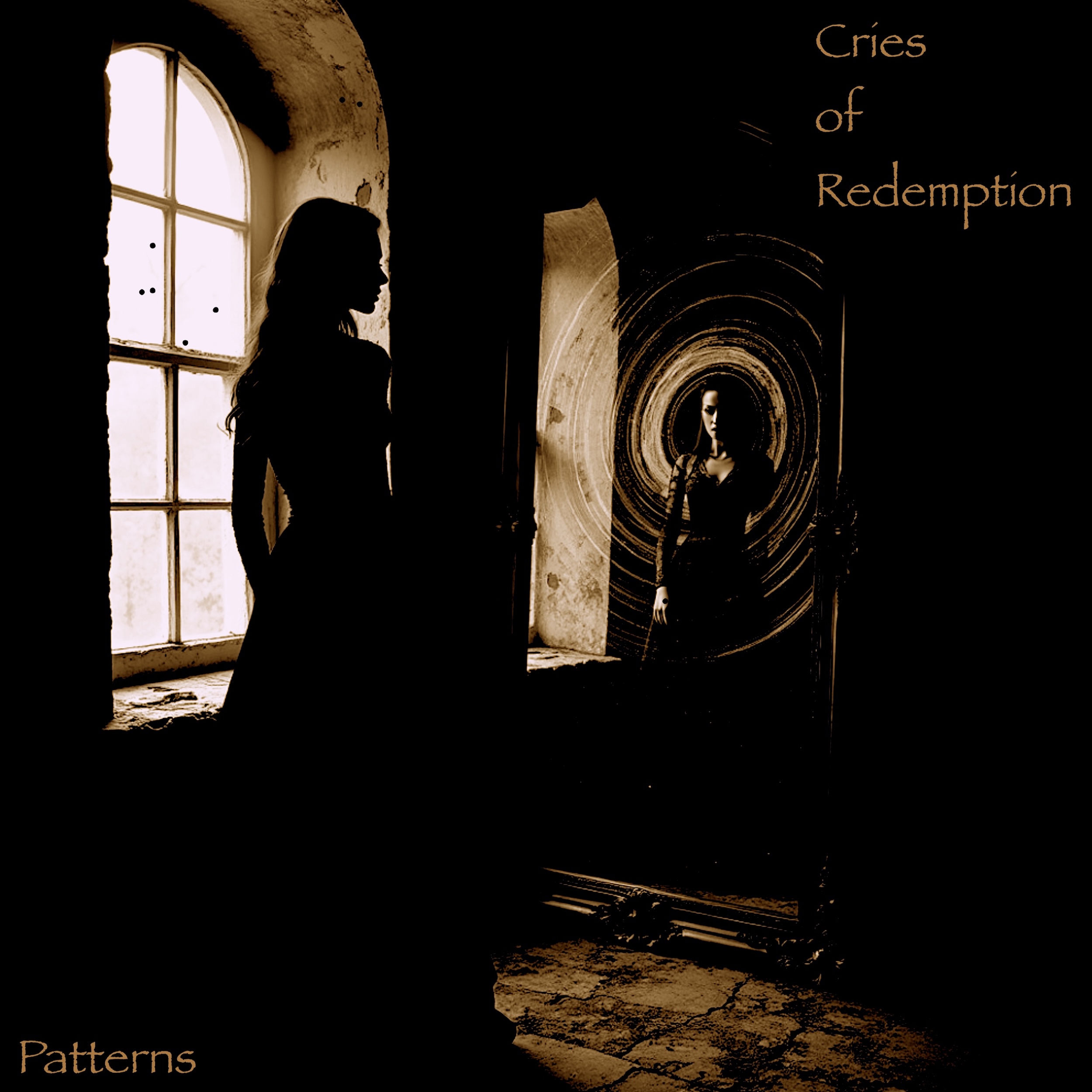
Born out of the creative restlessness of Savannah, Georgia, in 2007, Cries of Redemption (COR) is far more than a typical rock band; it is the living embodiment of the imagination and creative vision of its guitarist and songwriter, Ed Silva. For nearly two decades now, Silva has been working tirelessly to break down the barriers of genre and blend the raw energy of NuMetal with the hypnotic beats of Classic Trance and Romanian Deep House. The addition of Cinematic Trap elements has given Silva’s musical DNA a bold new dimension that is both experimental and daringly innovative. This musical evolution has been building towards a crescendo ever since March 17th, when Silva’s long-in-the-making musical odyssey in the form of eleven tracks on Patterns hit the airwaves as a statement of musical independence and a tutorial in modern-day composition that doesn’t just ask for your attention; it demands that you immerse yourself in a world of sound that is all about survival and reinvention. Let’s take a peek into the complex layers of this outstanding musical creation.
The journey begins with “Sanctuary, (Ibiza)” which avoids the common practice of a peaceful introduction by starting with a long, distorted guitar riff that drones along before a sharp, staccato synth pop sound and drum fill wakes the listener up into a grinding rhythm. The introduction to this song is perfect for a track that explores the concept of “sanctuary” not as a physical location but as a mental state of being under siege and seeking a fortress in the divine to get away from the noise of a crumbling world. The musical delivery is a thick, wall-of-sound approach that features the bass guitar as a muddy foundation for the high-pitched screams of the vocalist. The effect is immediate and inescapable, making the listener confront the need for a hiding place before the song eases into a melodic and soaring section that feels like a literal sigh of relief.
Following immediately after is “Impulse,” which eschews all subtlety. It begins with a soft mouth percussion, a chaotic, high-pitched screech of the guitar, literally sliding down the fretboard, and then launches directly into a blindingly fast and syncopated rhythm on the double-bass drums. The theme here is the internal conflict of the human will. It’s a lyrical exploration of the “impulses” that occur in the fraction of a second that bring us to self-destruction. In the song, we meet a character who has unknowingly created something on impulse that is now watching him. The music is frenetic and highly technical, with the guitars playing off in jagged, dissonant rhythms that mimic the racing heart of a man in the midst of a moral crisis. The song features artist Chiara, and the vocal performance here is particularly noteworthy, as the singer moves from guttural roars to desperate, spoken-word whispers that emphasize the personal nature of the conflict. For the listener, it’s an adrenaline-fueled confrontation that makes you feel the weight of your own decisions in the heat of the moment.
The tone shifts into a darker and broodier space with “Over the Edge,” which begins with a slow-building, low-tuned guitar chug that sounds like a heavy weight being dragged across the concrete. This mechanistic rhythm builds a sense of impending doom until the full band kicks in and the song settles into a mid-tempo groove. The theme here is the most vulnerable on the record, dealing with the brink of mental exhaustion and the “edge of the cliff” about faith. It’s about the horror of realizing that your strength has simply run out. The sound here is “heavy,” not just in the traditional sense of heavy music, but in the emotional sense of the “down-tuned” sound that vibrates in the chest. The effect is deeply empathetic and relatable to anyone who has ever felt like they were hanging by a thread, yet the relentless and unwavering beat of the drums suggests that there’s a strength hiding just below the surface of the despair.
In contrast, “The Return” brings a much-needed touch of melody and light into the mix. It features artist Denisse Ferrara and starts off with a clean, delay-affected guitar lead that sounds like it’s coming from a canyon somewhere, providing a bright, shimmering contrast to the darkness of the previous track. The story is, of course, about the faceless part of us that we can’t see and can’t even hear sometimes, which haunts us. Musically, this is the most accessible track on the album, with a chorus that is both melodic and features smooth vocals that transition into a powerful, emotive “shout-along” style. It’s a grand, expansive sound, with a lot of “open” cymbals from the drums to provide a sense of space, and it’s a sound that’s very much like coming home, providing a cathartic release from the intensity of the previous tracks.
The title track, “Patterns,” is the intellectual and technical center of the record. The song features artist Chiara and begins with a complex interlocking guitar riff that repeats in a circular, mathematical way. It’s very clever and mimics the very concept of a life cycle. This isn’t a verse-chorus song; it’s a constantly changing world of technical metalcore. The lyrics are an in-depth look at generational behavior and the spiritual cul-de-sacs that we all manage to get ourselves stuck in—the “patterns” that define our failures. The vocal work here is relentless, mimicking the feeling of being stuck in a cycle. The technical instrumentation here is very tight, with odd time signatures that force the listener to pay very close attention. The overall effect here is one of deep self-examination, challenging the listener to evaluate the destructive patterns in their own lives, and providing the sonic “shattering” of these life cycles in a massive breakdown-filled conclusion.
“Pump” acts as an anthem for the album, beginning with a direct, aggressive vocal shout immediately answered by a high-tempo, thrash-metal-inspired drum beat. The song features artist Chiara. There’s no build-up here; from the first second, the song is at 100% volume. The subject matter is spiritual fortification, or “pumping” one’s spirit in preparation to go to war. It’s about the energy needed to live a life of conviction in a hostile environment. Here, the character lets is know that she’s malleable and cannot and will not break easily. The musical style is fueled by a strong “four-on-the-floor” beat, making it the most “mosh-friendly” song on the album. Vocals are consistently harsh and commanding, acting as a commanding officer giving a charge. The effect on the listener is purely physical, a shot of energy meant to get the body moving and the heart pumping.
The story becomes more personal with the title “This is my story,” which starts with a simple snare hit and a repeating guitar phrase that is more akin to a modern Christian worship song without the sheen and with a dash of distortion. The song is a “testimony” that shifts the focus from concepts to a more direct, personal story of transformation. The lyrics are direct and unadorned, trading metaphors for plain truths. The music on this track is built around the idea of “build and release,” starting soft and building in more instrumentation, more guitar harmonies, and more intense snare hits, until a crescendo is achieved. The effect is one of connection as the listener feels that they are not so much listening to a “performance” as a friend’s honest words.
“Let there be Light” begins with a lovely atmospheric intro, a wash of ethereal synth guitars reminiscent of the sun breaking over a dark horizon. It’s the most “grand” intro on the record. Musically, the song has an “epic” quality to the guitar work, with a vocal performance reaching for the highest notes within the singer’s range without sacrificing any of the grit. There’s an effect of awe and reverence, a moment of transcendental beauty that makes the heavy moments even more significant.
The most experimental track is “Freudian ship”, which starts with a jarring beat from the drums and a dissonant “wonky” or a recording that sounds like the song is slightly out of tune. This is fitting for the theme of the “Freudian slip” and the subconscious mind, the parts of our minds that we do not entirely understand or have complete control over. The theme of the song is the unknown motives of the heart and the “ships” that we sail that are driven by our subconscious mind and the unknown motives of the heart. The rhythm of the song is unpredictable and has sudden pauses and changes in rhythm that keep the user in a state of unease. The vocals are theatrical and have many different tones that reflect the different “voices” of the subconscious mind.
Next is “deSydTegration (part 1)”, which begins with a rather soft riff on the guitar that is industrial in sound and heavily distorted, like a machine that is running into a state of disrepair. It’s a rather dark and gritty opening that feels quite physical. The song serves as a visceral, almost hauntingly voyeuristic window into the fracturing of a soul. It is a raw and intentionally uncomfortable interpretation of the tragic, public unraveling that Syd Barrett endured during his final live performances, a sonic document of a mind coming apart at the seams. For those who curate the history of Pink Floyd and the heavy toll of creative genius, this track is more than just a song; it is an essential, grit-laden tribute to the beauty and the horror of a total internal collapse. It captures that rare, fragile moment where the human spirit loses its grip, making it a profound and deeply relatable exploration of the shadows that haunt the stage long after the lights go down. The physicality of the sound is “sludgy” and plays at a slow tempo, emphasizing the weight of the sound rather than the speed of the playing. The vocals are rather tortured and strained, and perfectly capture the sense of the process of change and disintegration. The effect for the listener is that it’s rather heavy and makes the process of change feel just as heavy and difficult as it is in real life.
Finally, the album ends the first chapter with “A man after God’s own heart (part 1)”. The song begins with a triumphant dual-guitar harmony that sounds like a classic heavy metal anthem, being uplifting, melodic, and powerful at the same time. This is the final resolution to the “patterns” the album was talking about, that even when our “patterns” are broken, we can still be valued. The musicality is “big” and inclusive, with a steady galloping rhythm provided by the drums, and the vocals sound more confident and settled than anywhere else in the album, leaving the listener with a hopeful resolution, turning the exhaustion of the journey into a lasting sense of purpose and peace.
This is not just an assembly of songs, but rather a raw and living testament to survival and evolution against the grain of the modern-day noise. In an era of music designed to be consumed in small, easily digestible morsels, the band has produced something far more enduring, a rejection of the modern streaming trends in favor of music that feels earned and deeply human. It’s a rare place where technical skill and soul are combined in a way that feels both global and personal. Every note is played with a level of precision that speaks to their incredible skill, but never loses that grit and heart that makes music relatable. It’s to hear a band come fully into their own, and to be left not only satisfied, but also hungry for the next chapter in their journey.
Stream the “Patterns” on Spotify
Follow Cries of Redemption here and their socials: Instagram, TikTok, Bandcamp, YouTube

- ROB FLETCHER’S “HELLS GATE”: A MASTERCLASS IN AUSTRALIANA ALT ROCK MAGIC - 28 July 2026
- THE TRIUMPH OF SOUND: WHY C’BATCH HAS CONQUERED US ALL IN “THE VAULT 4 – CINEMATIC” - 28 July 2026
- MRGEORGE IGNITES THE DANCEFLOOR: WHY “WAKE UP” IS THE RETRO-FUTURISTIC SYNTH-POP ANTHEM WE ALL DESPERATE NEED - 28 July 2026