
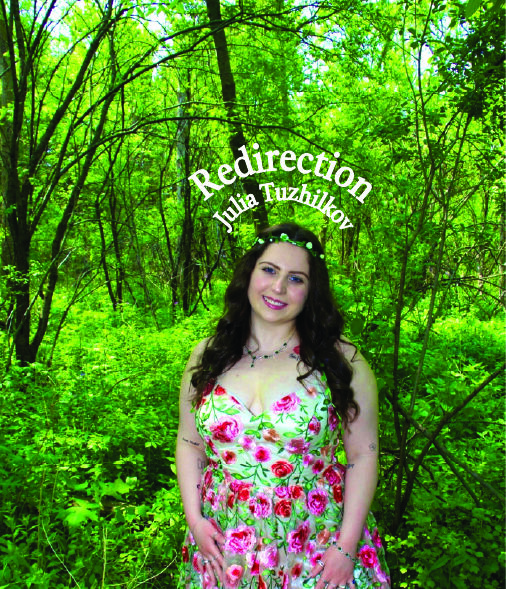
In “Redirection”, it’s not only the debut but a true guide in understanding your feelings. Through the track list of this album, which
consists of thirteen pieces of music, Julia Tuzhilkov guides us through all kinds of emotions we experience throughout life. Redirection was released on September 13th, and it seems like entering a paradise where everything is so beautiful and complicated at the same time. The beauty of the whole project lies in its ability to speak about things people try not to talk about. Julia sings about love, including the thrilling moment of falling into love and heartbreak after that, when it turns out that things could have been different. This album covers the topic of grief, the feeling of being betrayed by your friends and fights you have with yourself inside, trying to preserve your mental health, and the way to overcome all that and move forward. Let’s consider the journey Julia offered us in more detail.
The track starts off with a mysterious, atmospheric wall of muted synth chords and pulsating heartbeat rhythm that takes you straight to an introspective state of mind before you even hear the first line of lyrics. Setting the emotional tone for the entire album, “Everybody wants you” breaks through the mysterious introduction with the rhythm that gives you an instant feeling of vertigo from watching the object of your desire turn into a public person of interest, loved and appreciated by everyone but only for what they see in front of their eyes. The lyrical side of the song is dedicated to the intense alienation of being in love with or having a muse of your own that everyone in the world wants to get a piece of, or fantasizing that someone is ours when in reality we don’t know him. I mean, we know him (know everything about this person), but we don’t really know him. I mean, it’s a weird conundrum, like how I feel watching everyone slobber over your crush or even your celebrity crush (currently facing this with Hyunjin from Stray Kids). I know Hyunjin, his birthday, his favorite foods, his hobbies, everything about him like I’m his best friend, but I don’t actually know him. Musically, the song is characterized by a contrast between close-mic whispers in the verses and pop hook choruses, backed by a pulsing bass line and sparkling synth melodies. The effect on the listener is immediate and intense, serving as an anthem of catharsis for everyone who ever felt invisible right next to their beloved one.
Making the transition to a more emotionally weighty song, “Blame” starts with a brief conversation before the solo weeping guitar riff played electrically that resonates through the silence until a quick-paced and snappy percussion piece joins to ground it. In terms of the lyrical focus, it focuses heavily on the toxic blame game of post-break-up emotions and dissects the methods by which we use our weaknesses against each other in order to cover up the truth about everything falling apart at its core. It’s classic toxic masculinity and a toxic relationship. This persona tells us the story of how her relationship ended and as you will deduce from the lyrics, his reasons for messing up is not valid at all, his nonchalance however, is five star and this character tries to take the blame for the relationship blowing up in their faces but then, she remembers that she wasn’t perfect either but at least she tried to change and he did not. Julia’s vocal delivery is dark and smoky with a restrained intensity, making the harsh lyrics all the more biting, particularly the bridge where she gets slightly crackly from frustration. The instrumentation combines the raw indie-rock guitar playing style with an intense electronic beat, reflecting the conflicting emotions described lyrically. For the audience, this song becomes an outlet for any leftover resentment, allowing them to feel the rhythm and vent out their negative emotional energy.
The atmosphere is drastically slowed down with “The Way,” which begins with a gentle, cascading melody played on the piano that sounds like raindrops running down a cold pane of glass during an evening drive. In terms of lyrics, the song describes a genuine love connection and a story about how friendship turned into love. This story is that epic love you read about in books and the type of relationship where you can tell how a person feels about you just by the way he looks at you. Vocal performance in “The Way” is exceptionally vulnerable and gave me goosebumps, goosebumps that I still have while writing this, as it includes the use of the breathy head voice during the verses before it develops into the powerful plea performed from the chest. Musically, there is a lot of space between the notes in the main theme played on the piano before ambient strings are added along with the bassline.
Escaping the gloominess, “Bad Influence” opens with an intense, energetic burst of drum machine sounds and a sassy, swaggering bass line that immediately draws you into motion. Lyrically, the song is all about the sheer enjoyment of giving in to temptation and having somebody bring you down because it feels so good. The character in the song talks about how willing she was to give everything to her beloved, but he makes her look bad, just being himself. Singing-wise, Julia has adopted a snappy and rhythmic approach, which she delivers with playful cheekiness, thus revealing herself as a talented artist who can do much more than sing love ballads. In terms of musicality, it is a classic pop-rock song with its catchy melody and clean sound produced by distorted rhythm guitars and sharp percussion loops. Bad Influence is a real adrenaline rush and a song that offers you an exciting taste of guilt and recklessness.
Stepping back into the shadows, “In my memory” opens with a ghostly, reversed vocal sample that slowly melts into a warm, sustained keyboard pad, creating the eerie sensation of wandering through the haunted hallways of your own past. Lyrically, it is a masterclass in capturing how a person’s presence lingers in a room long after they are gone; the song doesn’t specify who isn’t present anymore or why, it just lets you know that the character is grieving and this person who was a big part of her life and how she keeps them alive in her memory. Vocally, Julia delivers one of her most emotive performances on the album, utilizing a fragile, trembling tone that feels dangerously close to breaking point, heightening the sense of genuine grief. The musicality relies heavily on atmospheric reverb, lingering piano chords, and a slow, heavy heartbeat drum pattern that mimics the physical weight of nostalgia. It leaves a heavy, lingering impact on the listener, often triggering vivid personal flashbacks and offering a comforting ache for anyone nursing an old wound.
The mood of this song depends entirely on “I’m done,” where the vocal starts off with a beautiful piano melody in a bold way, which then gets accompanied by the slamming drum beat as the singer draws the line. The lyrical aspect of this song is all about reclaiming one’s self-respect, and it tells the tale of how it feels to have enough of living a life to please others. It’s an encouragement to give the middle finger to anyone who tries to take advantage of you. Vocally, this is a very bold and assertive song, completely changing the tone from vulnerable whispers to a powerful chest voice in order to make one’s point clear and concise. Production-wise, the song has quite a bold and assertive sound, as well as some indie pop features, such as distortion of bass and sharp synth sounds.
Infused with plenty of intoxicating warmth, “In love with you” starts with a gorgeous sound of strummed acoustic guitar followed by multi-layered harmonies filling the stereo space. This song is full of romantic lyrics that do not contain any sarcasm typical of other songs from the album but rather speak about the scary joy of falling into unconditional love with another person. As for the vocals, in this song, Julia seems to be absolutely changed since the sound of her voice is honeyed and full of warm shivers like a warm sunshine that breaks through dark clouds. What is more, there is a fantastic musical performance with the use of organic instruments, including acoustic guitars plucked with fingers, bass that can barely be heard, and strings that give the choral part of the song unbelievable height.
But the pendulum suddenly shifts back to harsh reality in the form of the song “Don’t want him anymore”, beginning with an icy synth tone and industrial snare beat, which makes it crystal clear that there isn’t a trace of romance left at all. This song tells the story of the psychological transition one experiences right after a breakup when they’re no longer longing but suddenly feel a cold wave of freedom and indifference. Also, the character tells her replacement that the only reason that she gets to be with her ex is that she doesn’t want him anymore. Musically, Tuzhilkov performs the track with such a cool and indifferent vibe, not adding unnecessary elements of singing into it but rather giving conversational voice to the lines. Musically, it sounds slick and minimalist and even slightly electronic due to its rhythmic pulse and synths, making it sound like something you don’t even have to think about once you’ve listened to it just once. And it’s extremely empowering in this way.
Venturing into the emotional essence of the project, “Miss the most” begins with a forlorn guitar and drum intro. This song can be looked at in two ways. The character in the song may be missing an ex, or she may be missing a friend. People underestimate the pain that comes with friend breakups; it’s as painful as romantic breakups, if you ask me. Whether friend or lover, our character lets us know that she will miss him or her the most out of anyone she’s ever had to say goodbye to. As for vocals, Julia’s performance is uptempo and urgent and has rock-inspired instrumentation; it bears all the markings of a typical breakup song. Instead of making us sad, this song offers a beer and a seat to vent over the relationships that died slowly and yet remained a part of one’s life story.
Moving into a more rhythmic and reflective space, “Sometimes” opens with a soft piano melody. Thematically, the song deals with the non-linear nature of recovery, making the singer and the listener understand that going through life is not an easy feat where you have smooth sailing every day, but there will come a day when everything will be fine, until you fall hard and suddenly. Our character tells us how she feels, and of course, it’s something that we have felt: the feeling of wanting to give up, but we shouldn’t; we should keep going. Vocally, the singer delivers the lines with such ease as if the listener is in a cozy conversation over tea at night with his or her best friend. Musically, the combination of organic folk-pop instrumentation along with the inviting vocal harmonies makes the listener feel comforted and embraced.
In contrast to its predecessors, “Strangers” adopts a more cool, dramatic, and detached vibe, starting with a chilling synthetic pad and the sounds of a distant, reverberating drum beat that produces the illusion of an immense hollow soundscape. Lyrics are about the surreal feeling of meeting a person who once knew everything about your soul, only to find out that he is now a stranger to you and you share the same timeline. Singing-wise, Julia uses a cool cinematic vocal approach which allows her to glide over the notes easily, reflecting the emotional detachment of the situation. As far as instruments are concerned, the song contains atmospheric synths, delay effects on guitars, and nocturnal rhythmic electronic sounds.
At the end of the musical path, “Let you go” starts off with a slow buildup of a warm synth bass accompanied by a slowly ascending chord progression, which is akin to the feeling a runner experiences when they take a deep breath before running uphill. From a lyrical standpoint, the track marks an absolute surrender of one’s emotions in the realization that clinging to anything just makes everything worse. From a vocal perspective, Tuzhilkov performs the most powerful performance throughout the entire album, injecting intense passion and power into the chorus in order to create a triumphant vocal delivery. Instrumentally, the track features the perfect buildup from a whisper into a huge wall of sound, complete with drums, guitars, and synth walls. The effect is transcendent as the listener gets a huge emotional release.
This song ends the album with “My girls xo”, where the song starts with a warm and intimate introduction, consisting of overlapped conversations and laughter in the studio, which then transitions into an energetic beat with a bouncy bass line and pop-like instruments. In terms of lyrics, the song acts as a love letter to girlhood and the importance of having people around you who will stand by you no matter what, being those ride-or-die people who will piece you back together after each heartbreak from the previous songs. Vocally, the singer seems happy, relaxed, and totally in control, letting go of her heavy melancholy and replacing it with a lighter, happier tone accompanied by gang vocal chants during the chorus. The music itself is full of energy, with the use of fast percussion, guitar lines, and cheerful melody.
It has always been Julia’s gentle and beautiful dream to create a haven of music that encourages you to sing out loud with your heart, lose yourself in the beat, and, most importantly, to feel totally understood in your weakest moments. If you have been scouring the independent music scene looking for something new and innovative with pop that combines razor-sharp lyrics with rich sonic elements, then this is what you’ve been looking for, because this album will prove to you that she has not only made it big, but has totally nailed it. From the very start of the record, she creates magic with every song, hugging the listener with lyrics that feel like diary notes written just for you. Julia, your genius leaves me speechless, and it is such an honor to see you working hard to bring life to these songs. I cannot wait to see where you are going to take us next with your amazing mind.
Stream the “Redirection” album on Spotify
Follow Julia Tuzhilkov here and her socials: Instagram, TikTok, YouTube

- “WASTED TEARS”: RICHARD GREEN DELIVERS AN UNTOUCHABLE INDIE-ELECTRONIC MASTERPIECE - 21 October 2026
- PRESS ON TO PROGRESS: HOW KAHMENCENTS AND CAZPERRBEATS TURNED LIFE’S WEIGHT INTO AN UNSTOPPABLE MOTIVATIONAL ANTHEM “PRESS SURE” - 21 October 2026
- WAKING UP TO GREATNESS: WHY JAMIE’S ELECTRIFYING NEW SINGLE “WAKING UP”,IS A POP-EDM MASTERPIECE - 21 October 2026
