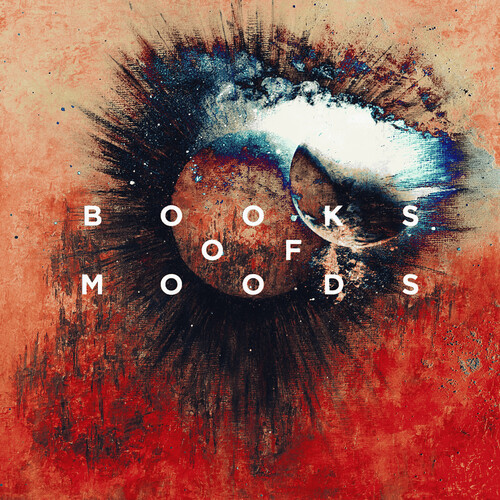
We’re delighted to bring to your attention Books of Moods, an independent Parisian art-rock project that seems to be a welcome splash of freshness, albeit a slightly sad one. The visionary Hugo Sailer, the mastermind behind the one-man band, acts as a medium for the cinematic songwriting that we have witnessed this year. Books of Moods’ first work, entitled “Dreams”, was released on May 8th. This 11-track record is an extensive journey into the “oneiric”, a dream world in which the borderline between reality and imagination becomes blurred. It is grounded in nostalgia and the bitter feeling of “déjà-rêvé,” or the experience of reminiscing about something that never really happened before.
The album starts with “Space, PT.1”, where it does not begin with the usual cosmic sounds of space but with a muted acoustic guitar and violin-like tune that seems to emanate from the next room. Soon enough, there is the appearance of a clear, dry drumbeat to provide some sort of rhythm. The lyrics discuss the theme of emotional space rather than the idea of stars, which highlights the importance of breathing space within the confines of a busy relationship. The character in the song talks about escaping from this space and leaves the song on a hopeful note. In terms of musicality, what stands out about the song is the breathy, whisper-like vocals that can be heard from the very forefront of the track.
As the song moves into “Slow Day,” the introduction is marked by an idle synth then bass line accompanied by the faraway sound of a ringing phone, which gradually merges into the dreamy synth pads. The song’s concept revolves around the idea of beauty in idleness and the absence of guilt when turning down productivity in an excessively active environment. This song’s message is similar to that of Bruno Mars’ “Lazy Song”. Not to paint out the character as lazy but just as someone who is taking it easy for a day or more. The music in the song serves as the epitome of pocket playing, where the rhythm section plays a little behind the beat, further reinforcing the sensation of languor. The vocals are silky smooth, reflecting the carefree nature of the lyrics.
The title song, “Dreams”, has a surprising introduction that features an energetic hi-hat rhythm and a funky guitar riff. Contrary to its title, “Dreams” is not a dreamy ballad; rather, it deals with the stresses of ambition and the thin boundary between realism and make believe. The persona in the song tells her partner how pleasant her dreams were, sleeping next to him. This idea is not impossible because sometimes, being with a person gives you this peace that transcends into dreams. The instrumental arrangement of this track is heavy and layered, with a walking bass line and electric keyboards. The vocals in this song are stronger compared to the other tracks, especially when reaching high pitches in the chorus as though expressing desires.
“Travel” begins with an interesting sound and a guitar melody that is very captivating, which plays a looping, almost hypnotizing melody. The song can be looked at in two ways. Physical travel and metaphorical travel. The song’s metaphor leaves behind any association with physical travel and deals more with the experience of discovering oneself. While with the other way it’s looked at, it focuses on physical travel where the characters are physically traveling. There is a combination of natural sounds produced by percussion instruments and some digital glitches, resulting in a so-called “world-electronic.” Vocals are distorted with various effects of echo and delay, and there is an impression that the voice calls out from different locations on a trip.
When it comes to “Gaia”, the opening is characterized by a rumbling sound coming from a guitar. To understand this song you should know what or who Gaia is. Gaia is a name that is used to refer to Mother Earth. In terms of lyrics, “Gaia” can be referred to as the love letter dedicated to the Earth, praising its beauty and our biological link with it. As far as the instrumental part is concerned, it is quite impressive, with strings and heavy kick drum making the composition sound almost like a movie soundtrack. The Vocal parts are also impressive, as there is no artificial effect used at all.
“Space PT.2” is a transition song, which opens with an isolated, dissonant guitar lick fading out into silence. While it touches upon some of the same topics explored in the intro song, it explores these through a sense of resolution, not loneliness. The song is quite experimental in its sound, making use of the panning effects to produce sounds going from one ear to the other, thus creating the sensation of a gravitational anomaly. Few lyrics can be heard in the song, with the emphasis being put on the guitar playing and low synth sounds.
“Holidays” releases the pressure in its introduction with light, ukulele chords and guitar playing faintly in the background. The theme of the song is quite simple and straightforward. The song presents a character who is recounting his holidays with his beloved to us. He mentions the things they do on this holiday and all the memories they make together. The composition is lively and cheerful with a melody created by an energetic bass line and warm brass. The vocals have a rhythmic quality to them, which makes it easy to imagine yourself having a conversation with the singer on a warm, sunny day.
The introduction for “Happiness” seems to be surprisingly gloomy with a slow synth tune and an acoustic guitar melody. Gradually, however, the melancholy gives way to triumph with an unexpected explosion of sounds played on a major key using synthesizers. The song’s lyrics examine the hard work needed in order to maintain one’s joyfulness. The song promotes unity by referring to us as “brothers and sisters, a calculated way of encouraging us to stay united forever. This is the feel good music that the world needs which was aptly provided. The musical performance of Happiness is powerful and very energetic, with an exciting drumming sound and high-flying synth lines. The singing itself is performed “belting,” i.e., emphasizing one’s efforts.
The first impression that one gets from “Sunday Mood” is the soft, rhythmic sound created by the gentle pressing on of a guitar. How are Sundays spent in your house because, the character in this song tells us all about his. This song also deals with the apprehension of the coming Monday, week and the serenity of the final moments of the weekend. There is only a single instrument used in the track, the warm sounds of the electric piano. The singer speaks in a whisper-like manner and in low tones, creating a sense of intimacy and a calm daybreak.
In the case of “Fashion Romance”, the intro comprises a high-fashion and “four-on-the-floor” house beat accompanied by a staccato synth guitar sound. The underlying theme for the song includes the shallowness of current-day romance and how people resort to wearing different “costumes” to get love. But in a much simpler way, the song is about a couple who share the same love for fashion so, they explore various fashion styles. As far as the musicality is concerned, it is clear, concise, and clean to perfection, where all instruments are quantized properly. The vocals of the song also add to its overall appeal by being sophisticated and detached.
This track “Amoureux” marks the end of the album, and it begins with an unadulterated recording of a tuning guitar before moving on to a three-chord pattern. Amoureux is a simple love song. The lyrics perfectly encapsulate the spirit of dedication, describing the state of falling in love, which is not only authentic but also precise. The love portrayed in the lyrics is one devoid of any superficiality but is true, simple, and sincere in all aspects. There are no hidden motives or over-the-top dramatizations in the song but rather an emphasis on genuine and straightforward romance, something which is quite rare. The song describes the pure and bare essence of love, where “enough is enough,” making the portrayal quite relatable and realistic. This track is not only pure acoustic but serves as a contrast to the other electronic tracks on the album. This track features the most natural voice from the singer, who is heard breathing and committing minor mistakes.
In this sense, the careful construction of each song serves as a haven from the outside world as well as a means of introspection. It is a work whose effect is similar to that of the madeleine de Proust, which releases memories stored within us and leads us to introspection. It is an album that speaks to all those who turn to music to find peace. In addition to the wonderful combination of musical references, the album has managed to capture the narrative power of legends such as The Beatles and The Velvet Underground but has incorporated it into its sound through modernity and freshness. It is a universe dominated by harmonious notes that sing of a reality that feels like looking into the mirror. As we immerse ourselves in the universe created by Books of Moods, we are confronted with a passion for storytelling that whispers to us and invites us to dream without limits. It is the type of album that you can’t help but suggest to all who cross your path. In terms of its songwriting abilities, instrumental arrangement, and vocal performance, it is simply a masterpiece of composition. As rare and as polished as the album itself, I find that I am eager to see what the future holds for this gifted musician.
Stream the “Dreams” album on Spotify
Follow Books Of Moods here and their socials: X, Facebook, Instagram, Bandcamp, YouTube

- “WASTED TEARS”: RICHARD GREEN DELIVERS AN UNTOUCHABLE INDIE-ELECTRONIC MASTERPIECE - 21 October 2026
- PRESS ON TO PROGRESS: HOW KAHMENCENTS AND CAZPERRBEATS TURNED LIFE’S WEIGHT INTO AN UNSTOPPABLE MOTIVATIONAL ANTHEM “PRESS SURE” - 21 October 2026
- WAKING UP TO GREATNESS: WHY JAMIE’S ELECTRIFYING NEW SINGLE “WAKING UP”,IS A POP-EDM MASTERPIECE - 21 October 2026